
Conversations: Above & Below: A Conversation with detritus dance
Jessica Bussmann October 31, 2026 Art
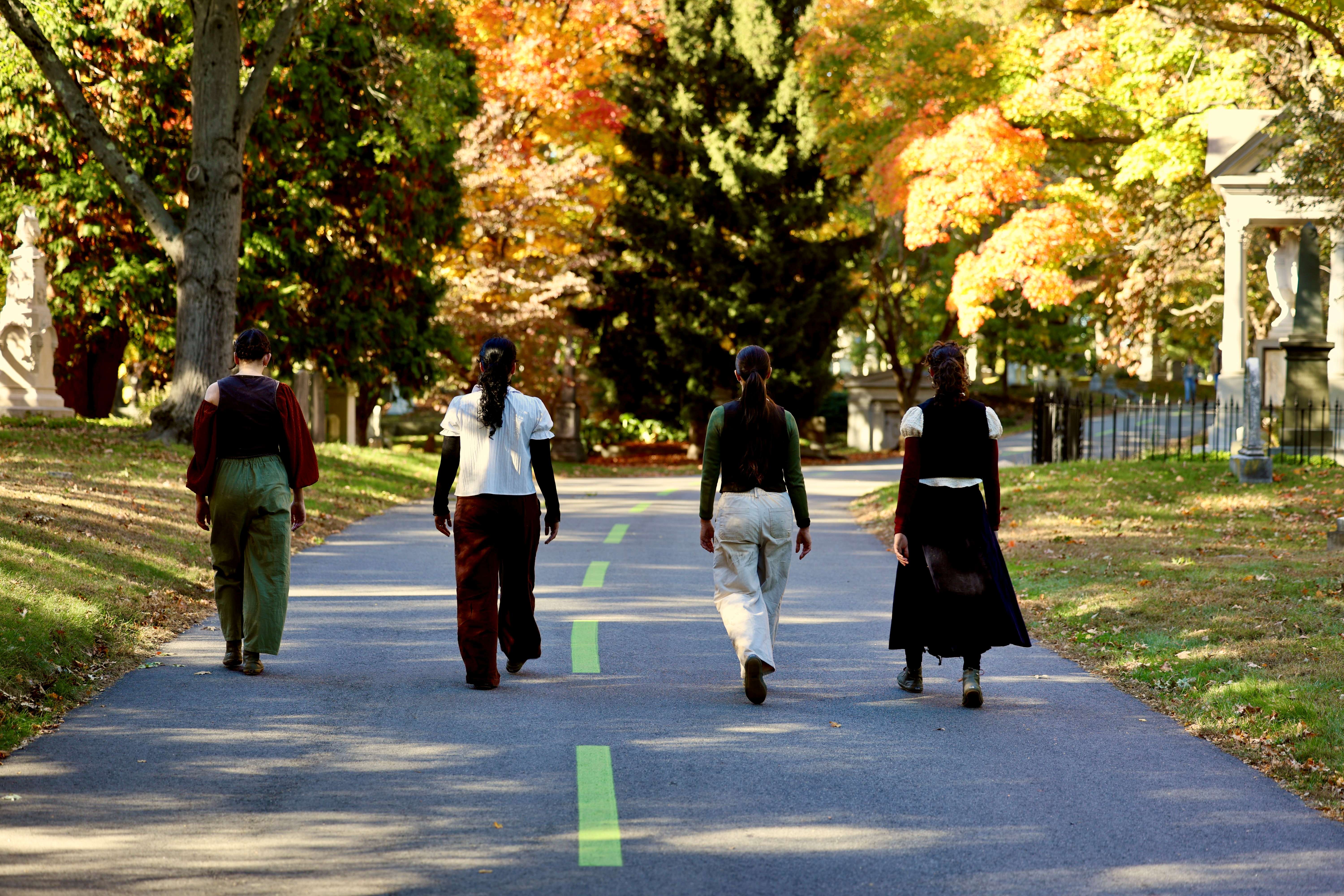
In 2026, we welcomed five Artists-in-Residence to create original works inspired by their experiences at Mount Auburn. In October choreographers Caroline Bradbury & Claire Lane, together known as detritus dance, performed Conversations: Above & Below, a site-responsive contemporary dance inspired by Margaret Fuller Ossoli's "Conversations" - intellectual seminars and discussion groups hosted for women from 1839-1844. Over three sold-out performances audiences experienced their creative interpretation of these historic women's stories.
When did your passion for dancing and choreography start?
Caroline: I learned to dance at my family owned dance studio where I was taught to by a long lineage of women including my mother, grandmother, aunts and cousins. The passion for dance and choreography feels like it has always been with me, passed on through generations.
Claire: I started dance classes at the age of 3 in my hometown studio in Greenfield, MA. In truth, I was dancing even before then– my family has home videos documenting me singing and dancing along to Shirley Temple as a toddler! My interest in being a choreographer ripened when I was a teenager, under the tutelage of my mentor Ann Sorvino. Learning about the “mothers” of 20th-century American Modern dance, including Isadora Duncan, Loie Fuller, Martha Graham, Katherine Dunham, and Pearl Primus inspired me to start making my own work. As for what inspired the founding of detritus dance, Caroline and I met serendipitously in 2021 while taking a site-specific dance class from former AIR Lonnie Stanton! At the time, we had both recently graduated from our respective undergraduate dance programs (Smith College and the University of the Arts), and we connected over mutual admiration of each other’s movement styles and similar interest in feminist scholarship. We decided to experiment in a studio together, and the rest is history.
What is your creative process like? Do you start with research, an image, an idea, or an inspiration? What about these women's stories inspired you to highlight them?
Caroline: With detritus, we typically start with a topic of research or particular event in history we are interested in. Part of our ethos is to bring forth histories that may have been forgotten, so researching the women artists of mount auburn cemetery has helped to further that mission.
Claire: For this project, our early inspiration came from diving into archival research of these four women. In particular, we were lucky enough to visit the “Said in Stone” exhibition of Edmonia Lewis’ work at the Peabody Essex Museum. The motifs, textures, and symbolism of her sculptures were incredibly rich fodder for exploration. We spent a lot of time in the initial stages of rehearsals discussing, journaling, and writing poetry inspired by these women’s lives and experiencing the resonant energy of their work situated within Mount Auburn’s burial grounds. Drawing from durational improvisational scores, we began building specific gestural vocabulary that became a choreographic throughline. These women’s incredible lives as abolitionists and feminists drew us to research them. Their pioneering beliefs continue to resonate with us two centuries later. Our work is possible in part because of the efforts these artists took to transgress New England’s restrictive social codes. This has paved the way for other women to explore artistic freedom, gender nonconformity, sexual liberation, and gain financial independence.
Can you share how your experiences visiting Mount Auburn’s landscape informed your work for Conversations?
Caroline: We were really inspired by how people are memorialized in the cemetery, particularly women. The way the women we chose to research are memorialized and remembered is something we wanted to highlight. I think each of the women we researched had a unique way to be memorialized for their time period, and it helped us envision the words and ways we as fellow women artists also want to be remembered.
Claire: Something we discussed a lot in this process is how the labor of public mourning and remembrance is feminized work. Particularly during the 19th century, women were central to mourning culture and were considered custodians of emotional and spiritual life. However, this significance is downplayed in many epitaphs in the cemetery, which flattened women artists and intellectuals to a single word moniker such as “wife,” “mother,” or “sister,” which only represents them in relationship to the patriarch of the family. So this idea of both presence and absence– what is visible and invisible– became a strong theme in our work. Another theme that struck home within the landscape was the idea of decomposition versus preservation. For example, The Hygeia Statue has weathered decay due to acid rain and environmental factors, yet it is meant to be an eternal monument. Many monuments are taken over by tree roots and due to forces of nature re-wilding. What withstands the test of time, and what is lost to history?
What is your favorite experience, memory, or interaction from your time at Mount Auburn?
Caroline: During one rehearsal when the company was dancing, another woman who was a pedestrian joined in our improvisation! It was a very sweet interaction that would not have happened in a normal studio space.
Claire: We had beautiful interactions with wildlife, including finding many, many toads in the grass and observing a hawk roosting in a tree branch above Hazel Dell. Toads became something of a “good luck” omen for us. Additionally, I will forever be grateful for experiencing Mount Auburn throughout the changing seasons– the blossoms of spring, the lush verdure of summer, and the fiery foliage of autumn. It is no wonder so many Romantic poets were inspired to write about this place.
What do you hope the audiences took away from your final residency performance?
Caroline: I hope they gained more knowledge on the quiet histories that have brought women to where they are today. So many of these stories have gone untold, and I hope the audience left with a new sense of what it meant to be a woman living in 19th century Boston.
Claire: Echoing Caroline, I hope audiences were moved to learn more about these remarkable women and their stories still in the process of being uncovered. I hope they witnessed the tenderness, reverence, and intimacy between the dancers and felt the echo of it linger in their own bodies. True to the title of our work, I hope our performance sparked conversation about the importance of embodied knowledge in shaping the ways we publicly remember history.
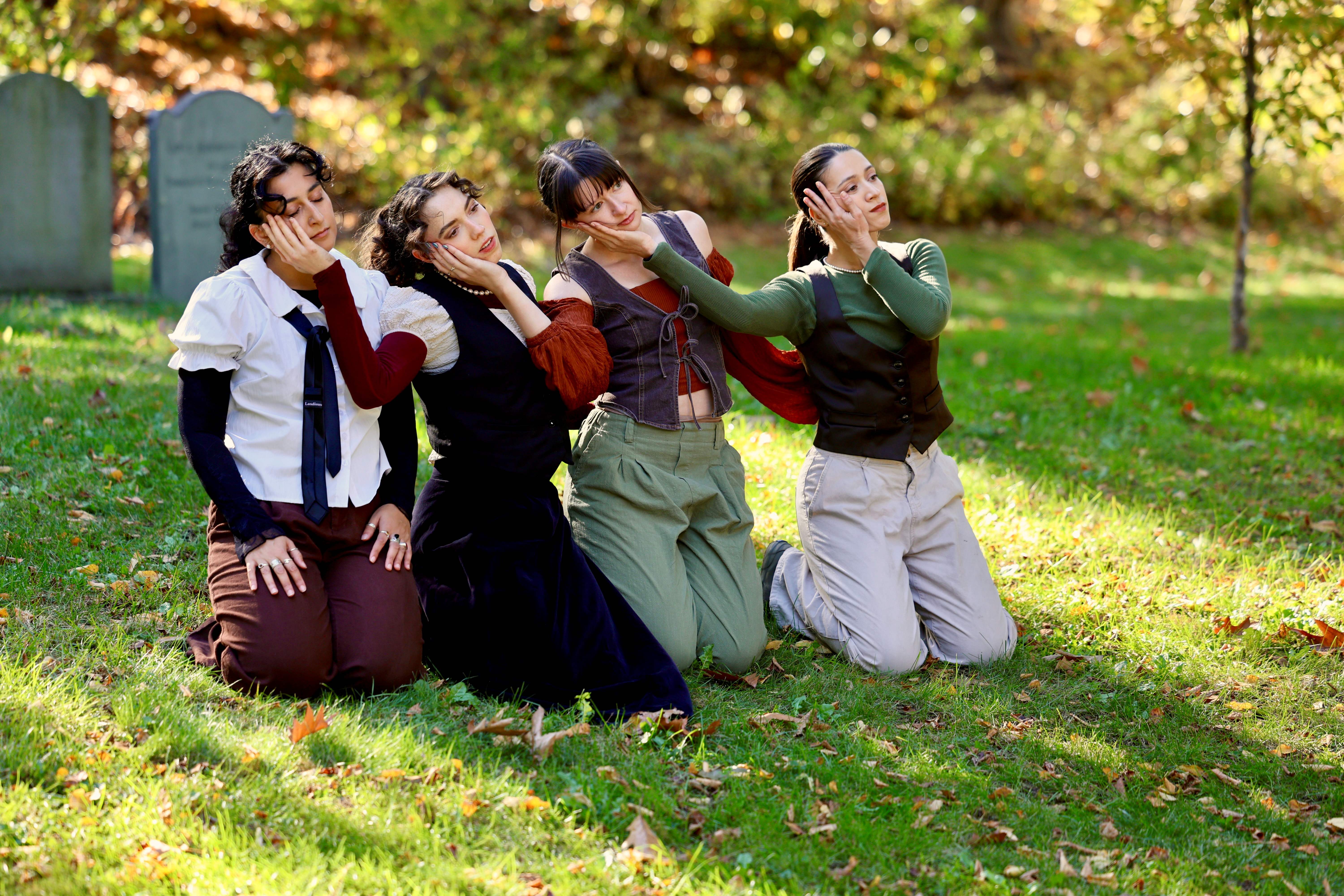
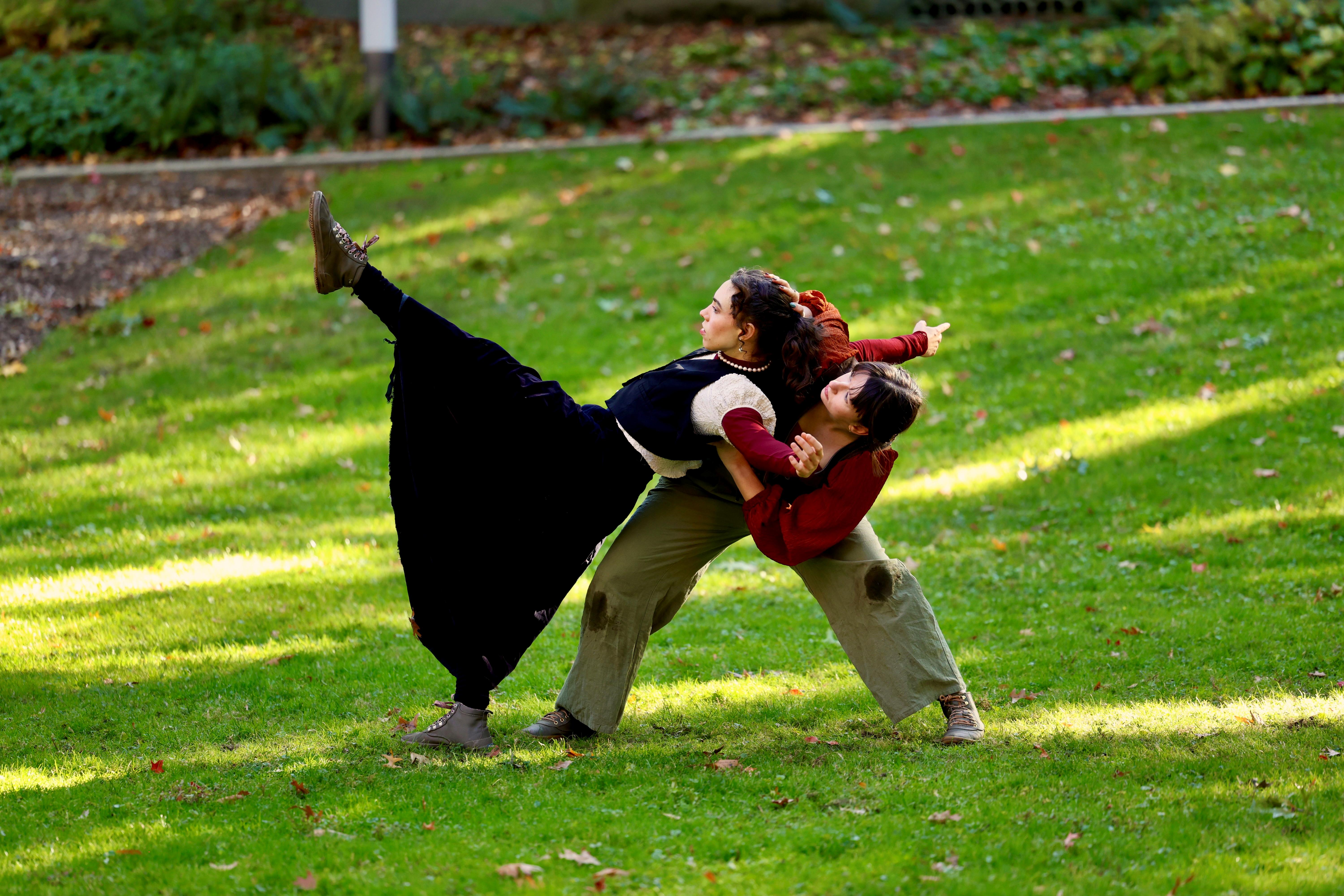
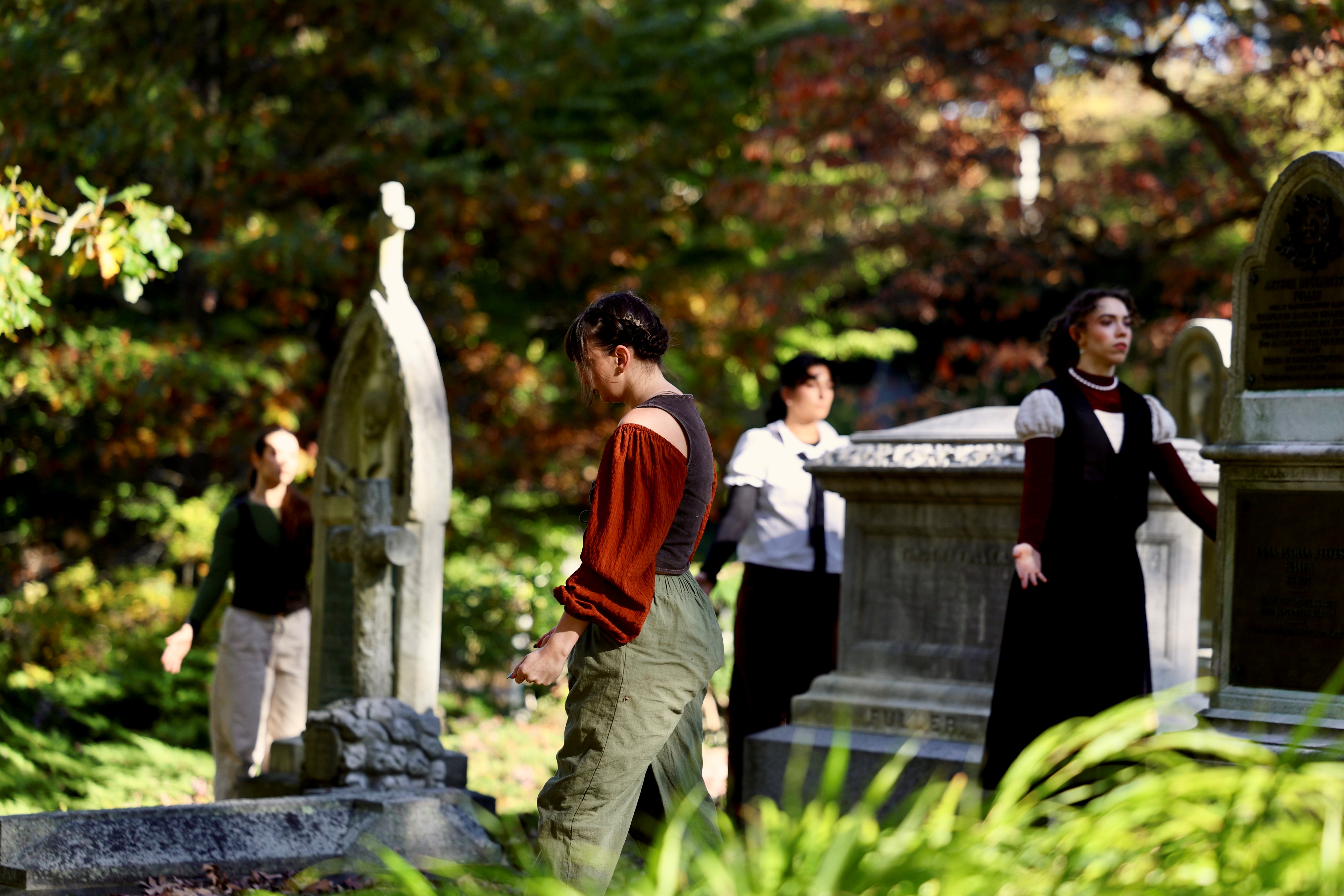
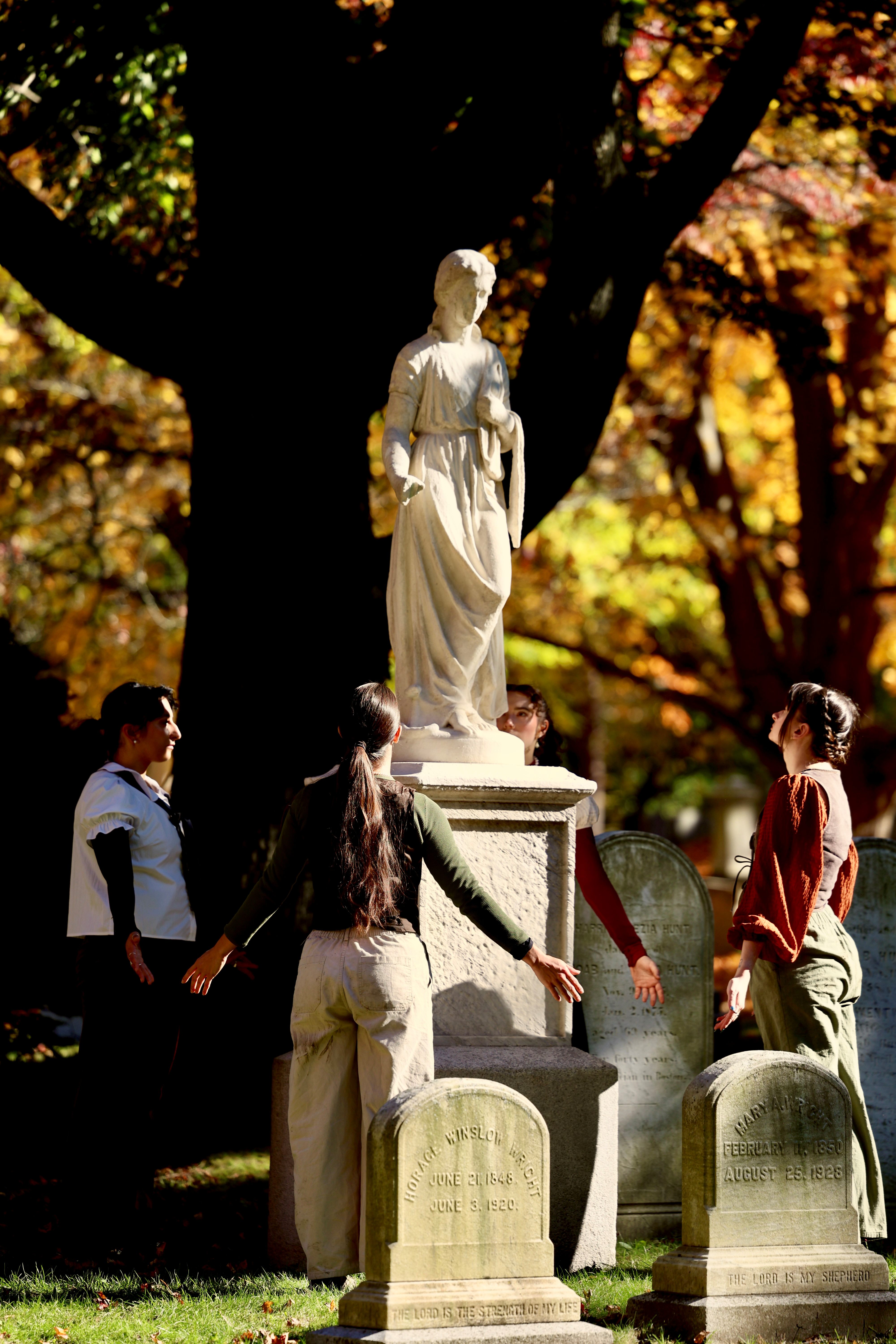
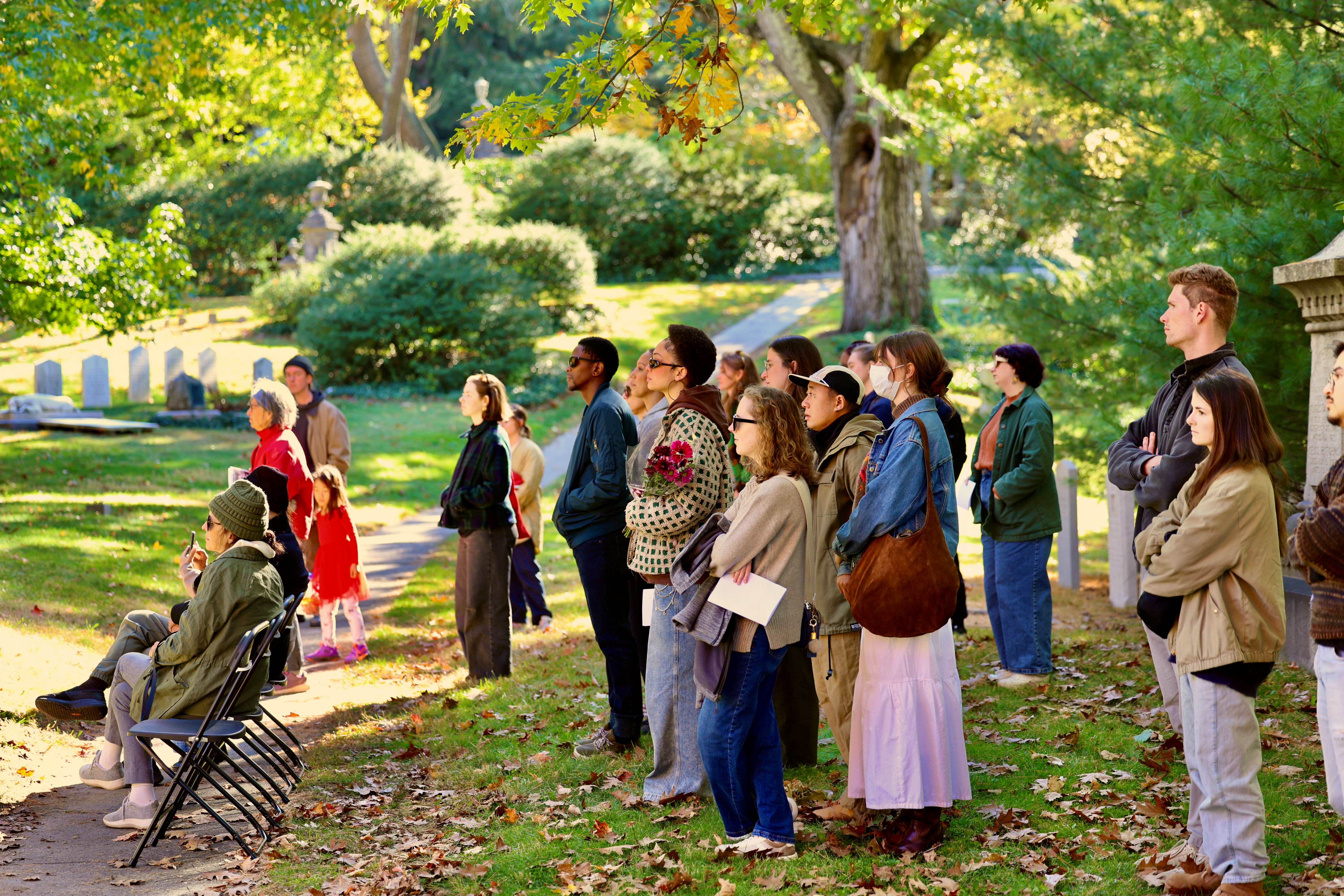
Photos by Corinne Elicona
_____________________________________________________________________________
detritus dance biography
detritus dance, founded in 2021 by co-Artistic Directors Caroline Bradbury (she/her) and Claire Lane (she/her), is an artistic collective focused on feminist story-telling through contemporary dance, collage, and text. Their research proceeds a lineage of intersectional feminists working towards dismantling patriarchal systems and values through subversive gender performance. Their most recent performance of Malefica, a work on the history of witches, was performed in Salem, MA. They have taught workshops and professional-level classes with Urbanity Dance Company, Midday Movement Series, and José Mateo Ballet Theater. detritus integrates a breadth of international perspectives including improvisation, Flying Low, and Physical Theater in their dance-making. https://www.detritusdance.com/
Comments
Comments for this post are closed