
Horticulture Highlight: Summersweet, Clethra alnifolia
Jim Gorman July 23, 2026 Plants & Wildlife
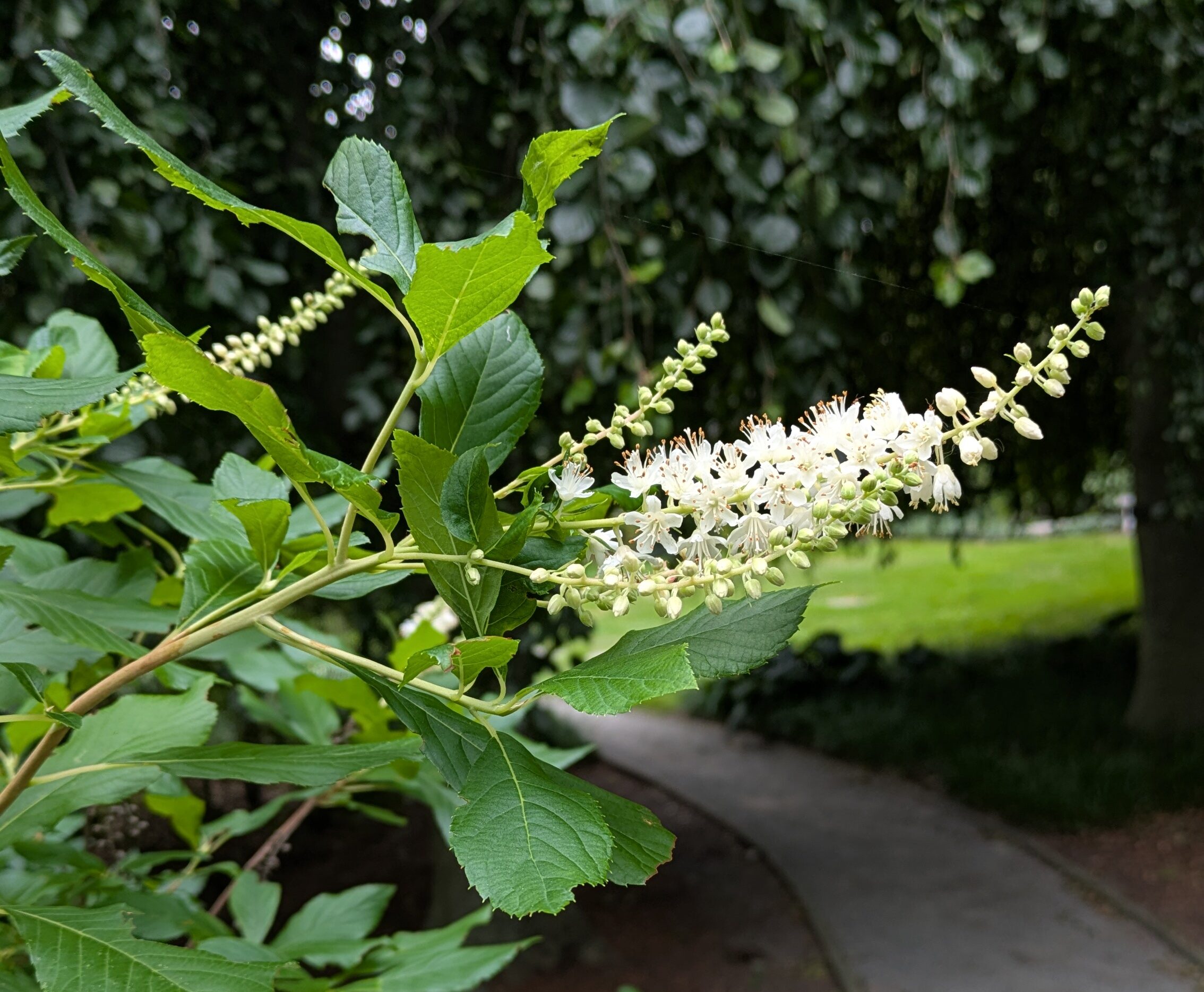
During late-July through August, as with all other months, Mount Auburn’s landscape theatrum includes an abundance of floral players. Admittedly, mid-to-late summer is a bountiful flowering time for herbaceous perennials and annuals, with fewer trees and shrubs in floral dress. We focus herein on one outstanding exception to the previous statement. Summersweet, Clethra alnifolia, is a low-to mid-sized (3’ to 8’), deciduous shrub native from Nova Scotia to Florida, west to coastal Texas.
Mount Auburn’s visionary founder, Dr. Jacob Bigelow (1787-1879) Lot 116, Beech Avenue, writing in his seminal flora of New England, Florula Bostoniensis, (1824, second edition) timelessly described this species as, “A tall elegant, white flowering shrub. Leaves about three inches long, and from one to two broad, inversely ovate [fattest above the middle], serrate [toothed], downy underneath in one variety, glabrous [not hairy] in another. Flowers in long racemes or loose spikes with downy stalks.”
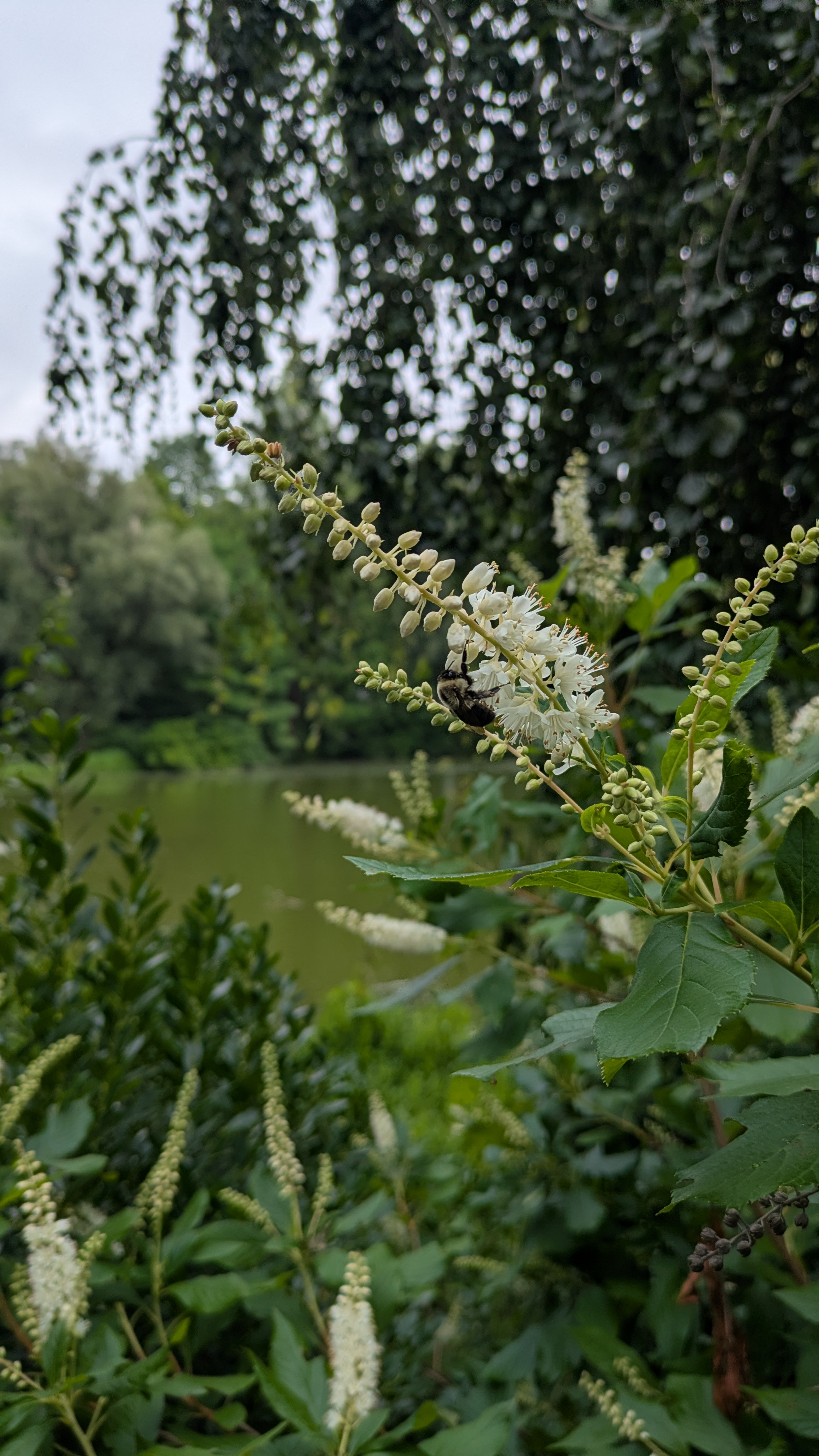
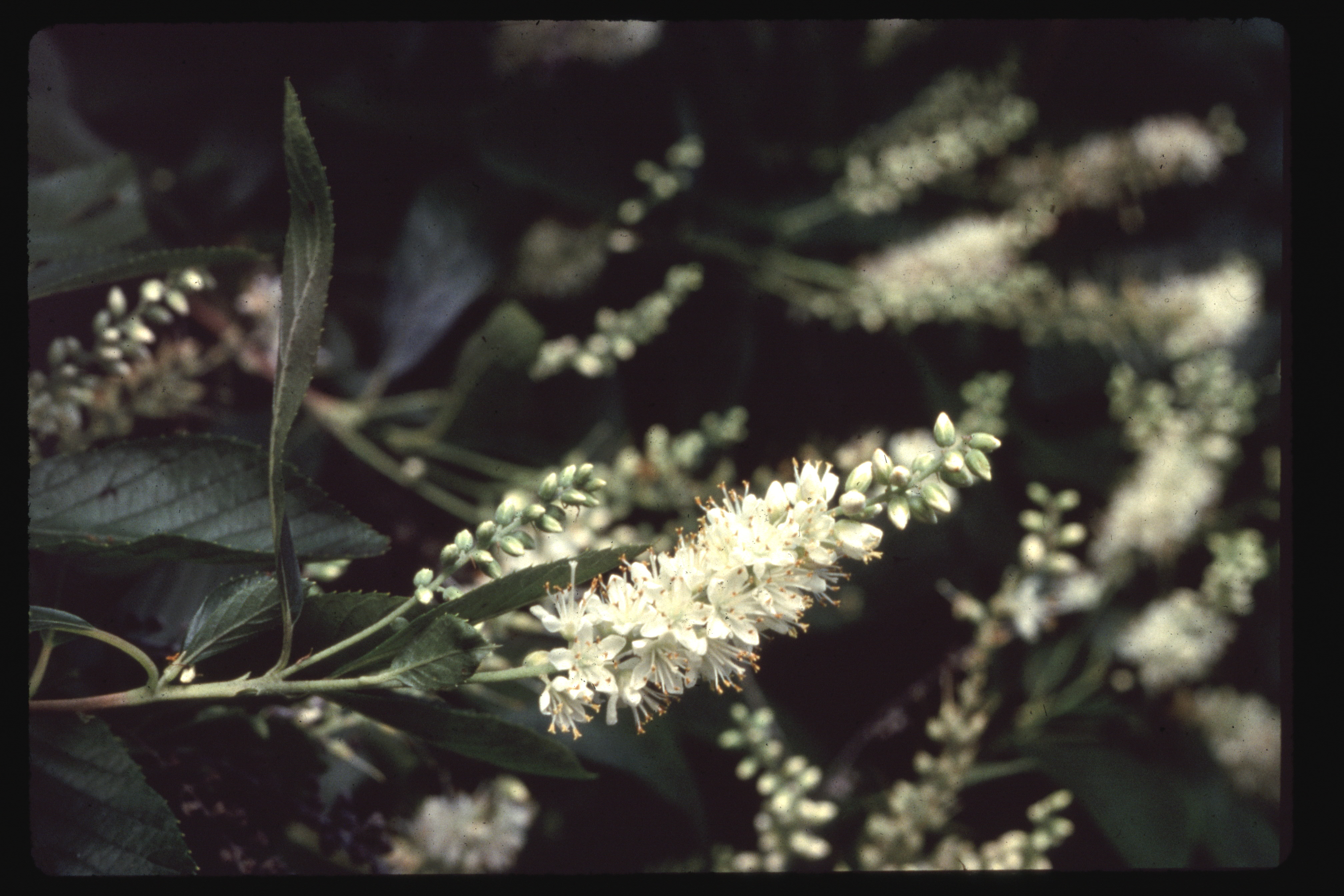
These are widely prized for their fragrant, white flower spires in summer. Each five-petaled flower is only 1/3-inch across, although they occur in dense multitudes along an upright raceme or panicle creating a bottle-brush effect. Individual flowers open first from the racemes’ bottom working up to the apex over a two-week time span. Noted plantsman Michael Dirr, author of numerous plant books, praises in his authoritative, Manual of Woody Landscape Plants, “lovely to look at but lovelier to smell; the bees constantly hover about…” Other writers note these flowers are loved by bees, butterflies and hummingbirds, while ignored by deer. At least two dozen of these Summersweet, Clethra alnifolia plants may be found around Willow Pond, Auburn Lake, Halcyon Lake among other locations.
…Its summer blossoms scent the air…
Emily Bronte
Additionally, we also grow numerous cultivated varieties of Clethra alnifolia, including Clethra alnifolia ‘Hummingbird’, a compact form which grows only three to four feet tall, having the same white flower spikes and glossy green foliage. High praise from Dirr again with, “…perhaps the finest compact deciduous shrub available to gardeners…”. High tribute reinforced with the Royal Horticultural Society’s (RHS) Award of Garden Merit, the Pennsylvania Horticultural Society’s (PHS) Gold Medal and the Cary Award which recognizes outstanding plants for New England gardens. We are growing two dozen of C. ‘Hummingbird’ at Asa Gray Garden, Cuphea Path/Halcyon Lake, Rosebay Ave./Auburn Lake. A notable pink flowered cultivated variety Clethra alnifolia ‘Ruby Spice’, grows at Birch Gardens, Lime Avenue, Sycamore Avenue and Snowflake Path.
The genus Clethra includes at least 70 species from temperate and tropical Asia, Malesia, North, Central and South America. We grow one Asian species, Clethra barbinervis, Japanese Summersweet. Its habit is significantly taller at 10 to 20’, more a small tree than a shrub. It also has summer-blooming fragrant, white flower clusters, but their 4-6” long panicles are semi-pendulous, often having a slight twist. The dark-green leaves on some plants may exhibit reds and/or burgundy autumn colors. As they age, winter interest increases when the smooth, gray-brown bark of its trunk stems peels into polychromatic colors, reminiscent of Stewartia or Lagerstroemia. As with Clethra alnifolia ‘Hummingbird’, Clethra barbinervis, Japanese Summersweet has been the recipient of the RHS’s Award of Garden Merit, the PHS’s Gold Medal. We grow two fine specimens, one on Viburnum Avenue and another in Asa Gray Garden.
Within our Asa Gray Garden, by growing both Clethra barbinervis, Japanese Summersweet and our native Clethra alnifolia‘ Hummingbird’ we further pay tribute to the renowned 19th century American botanist, Asa Gray (1810-1888), Lot #3904, Holly Path, and his research regarding phytogeography. Through his studies of the American flora, particularly using comparisons of Japanese plants to their close relatives in North America, Gray achieved international recognition. His published observations of the close similarities between the floras of eastern North America and eastern Asia lent credibility to his defense of Charles Darwin’s (1809-1882) then controversial writings.
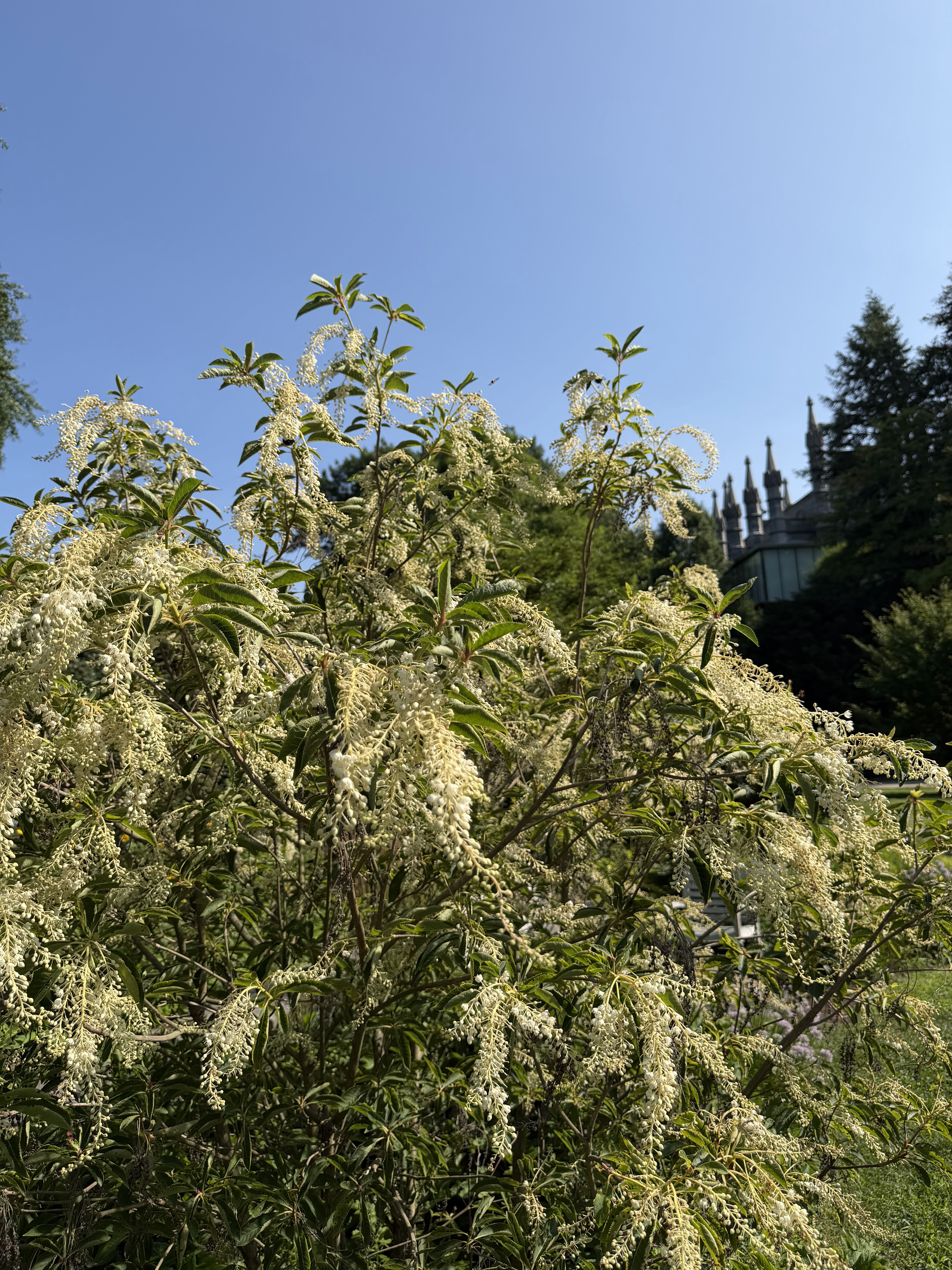
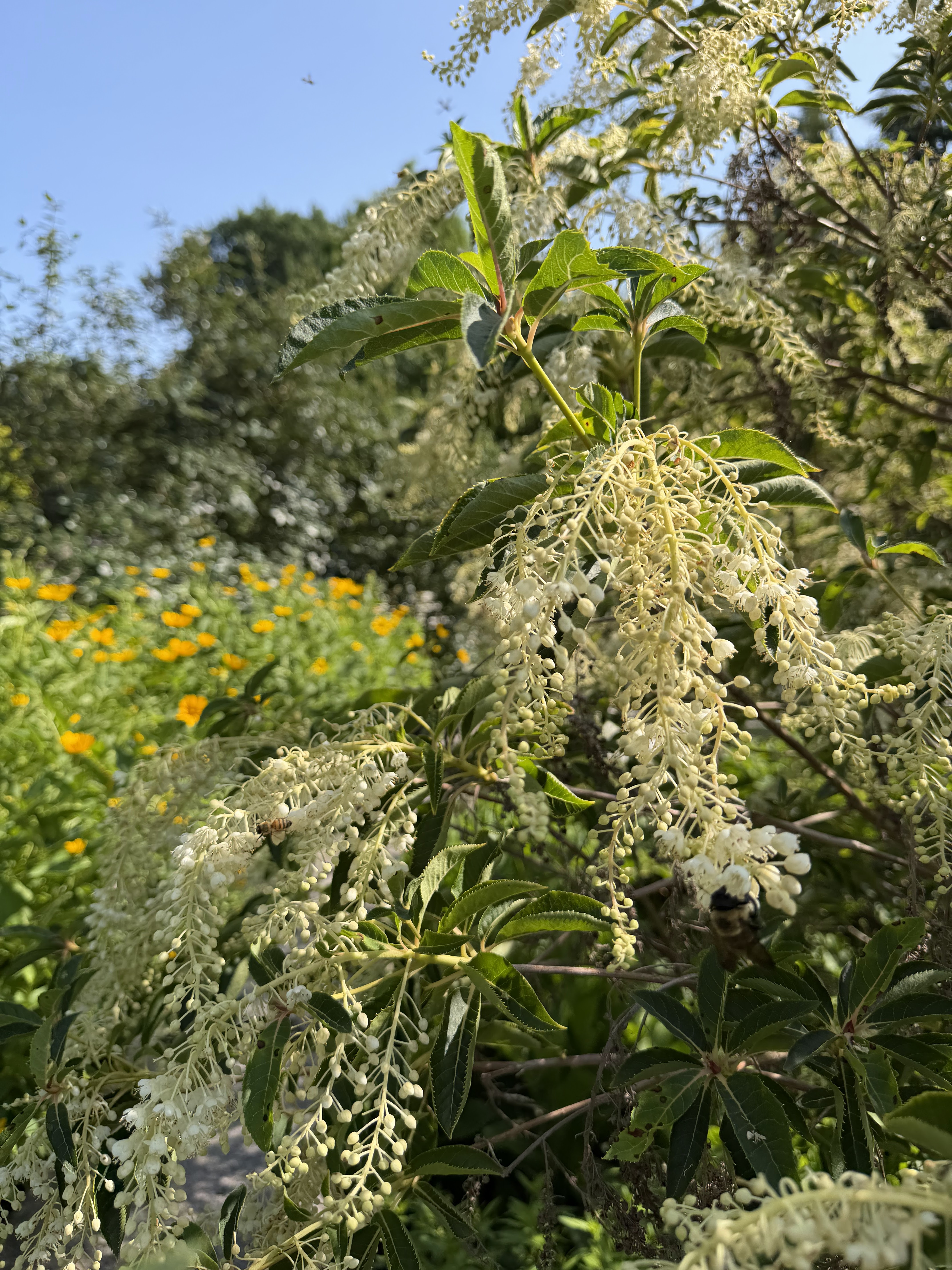
Regardless of any history and/or controversy, on a summer visit to Mount Auburn seek out the beauty and fragrance of our many Summersweets, and while you’re here give a well deserved thank you to the dedicated horticulture workers you encounter.
Comments
Comments for this post are closed