
Horticulture Highlight: Scarlet Oak, Quercus coccinea
Jim Gorman November 3, 2026 Plants & Wildlife
I robbed the Woods -
-Emily Dickinson
The trusting Woods -
The unsuspecting Trees
Brought out their Burs and mosses
My fantasy to please –
I scanned their trinkets curious –
I grasped – I bore away –
What will the solemn Hemlock –
What will the Oak tree say?
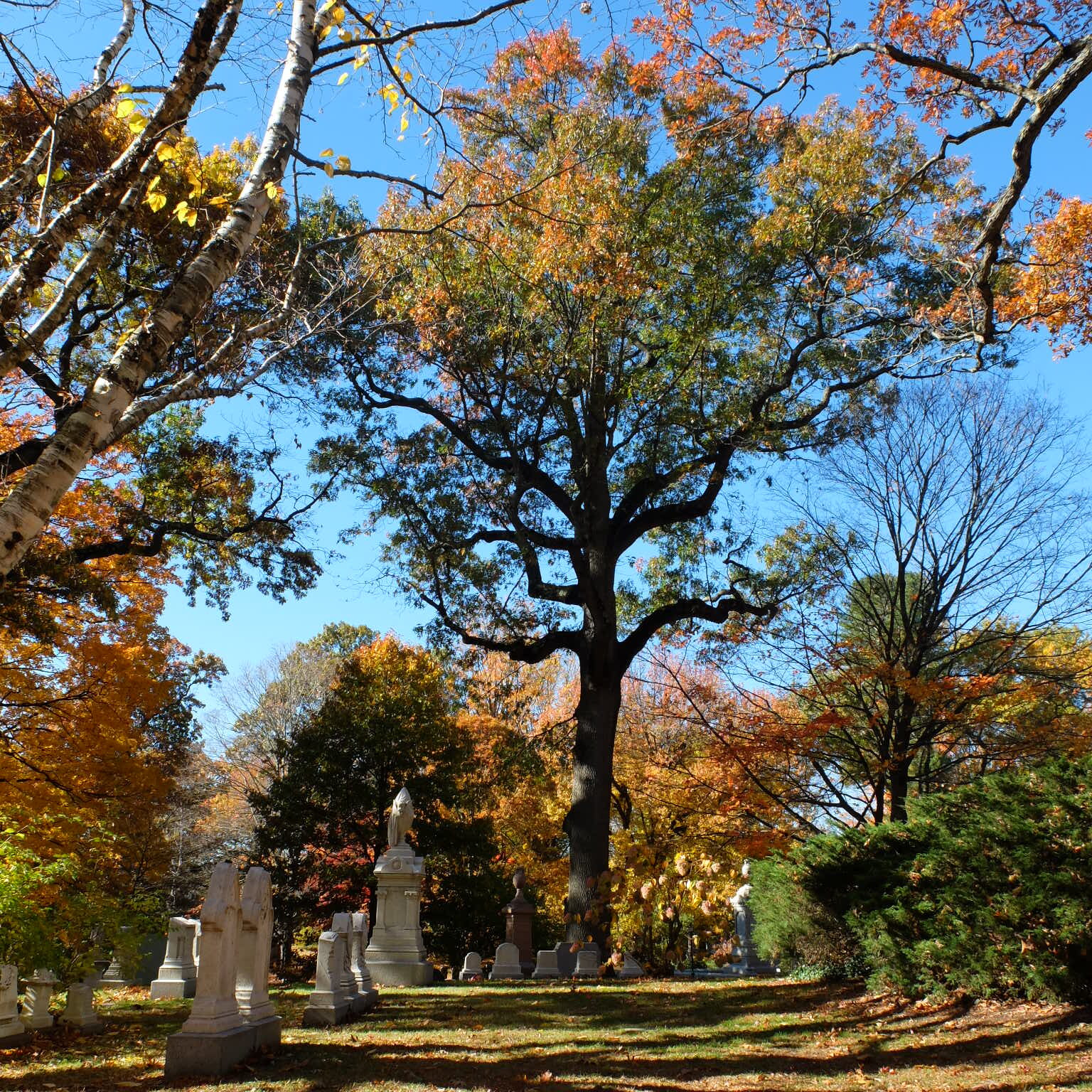
Dickinson’s Amherst woods would have included Scarlet Oak, Quercus coccinea. This tree has a native range that extends from southern Maine to Georgia, and west to Michigan and Missouri. Scarlet Oak will often claim the autumnal stage, with bright red or yellow, fall foliage from late-October, well into November. Tolerant of dry, sandy, soil, this large, graceful tree was one of several North American oaks that floristically greeted, seventeenth-century European colonists, after their long, oceanic voyages.
The large genus Quercus, which is Latin for “oak tree”, includes over 400 species worldwide (60 species), of trees and shrubs, deciduous and evergreen, that are primarily native to the northern hemisphere. Oaks have a long cultural association, factual and mythological, with humankind, often symbolic of strength and endurance. Many Greeks and Romans believed that oak was the first tree that grew upon the earth, and was the tree of Zeus, and/or Jupiter, their respective king of gods. In Norse mythology, the oak was associated with Thor, the god of thunder. In 2004, the United States declared the oak to be our national tree, joining at least a dozen other countries, which have also designated the oak as their national tree.
…And thou, majestic oak, from yon high place
-Mary Baker Eddy
Guard’s thou earth, asleep in night’s embrace,…
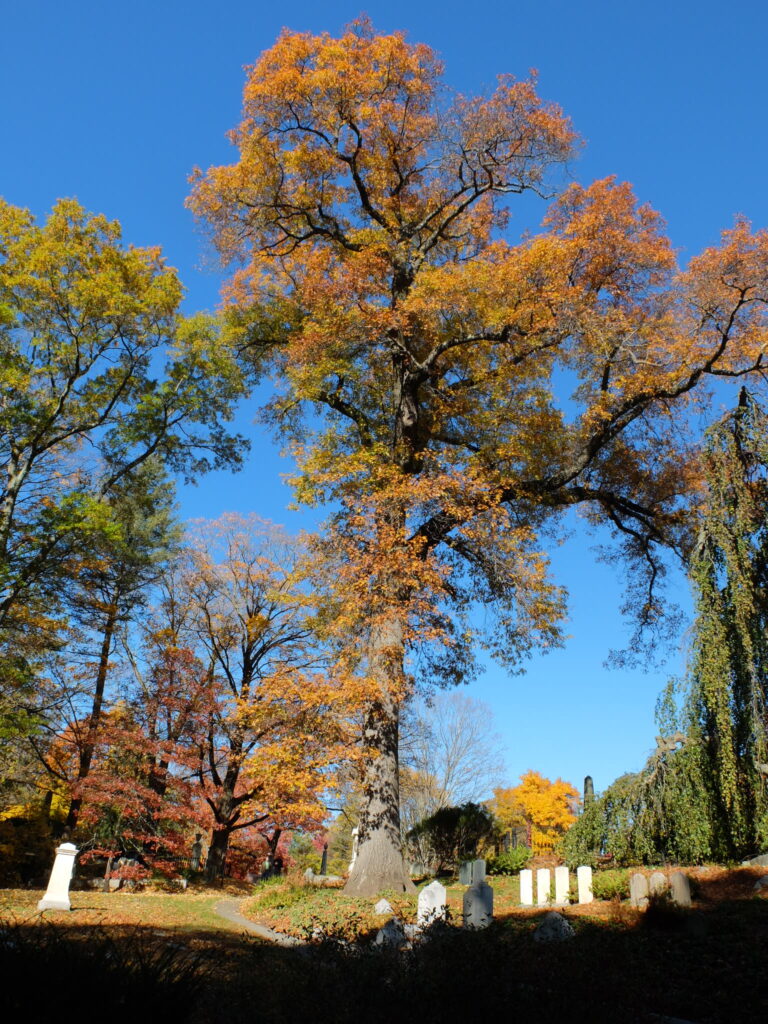
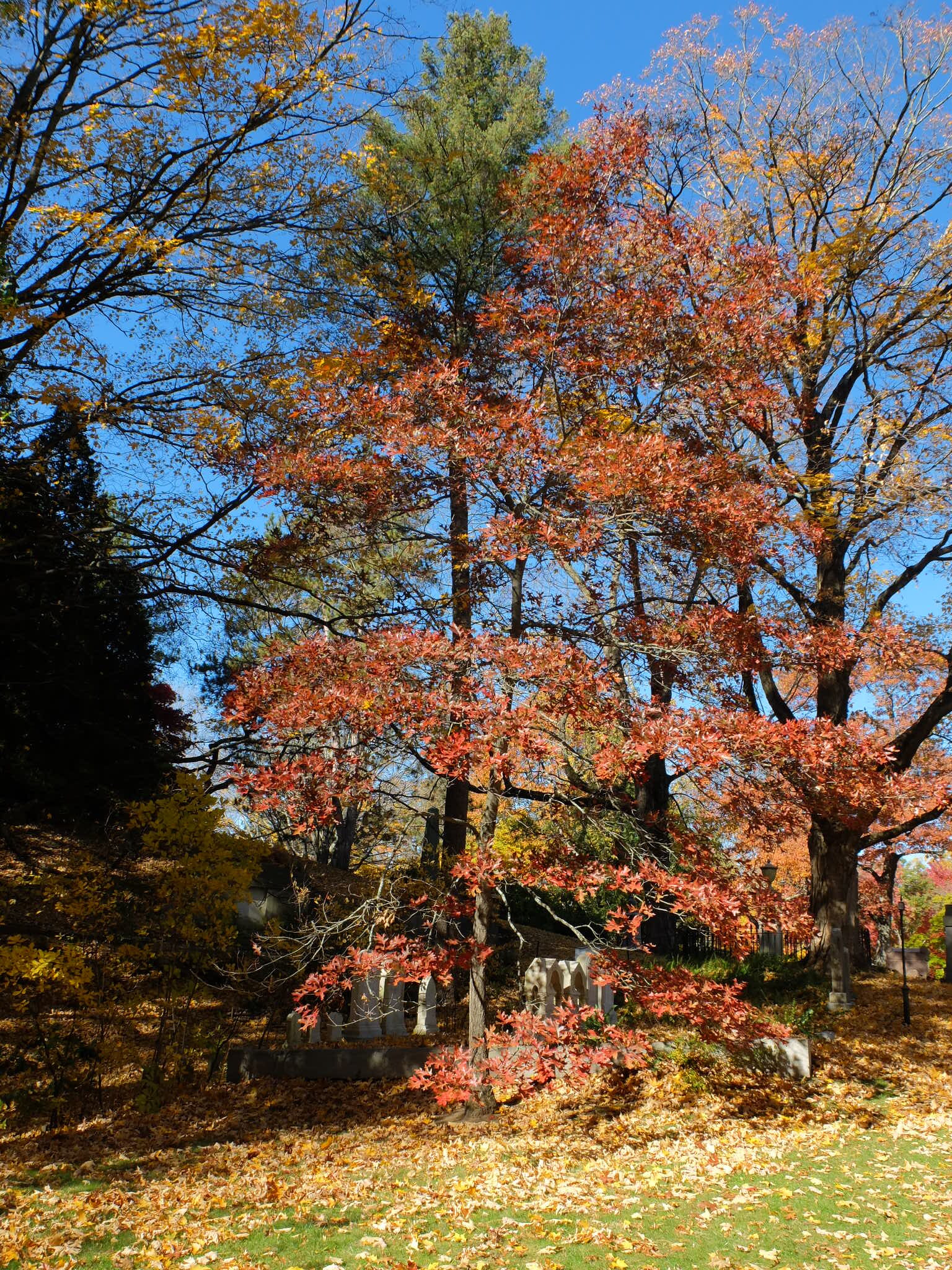
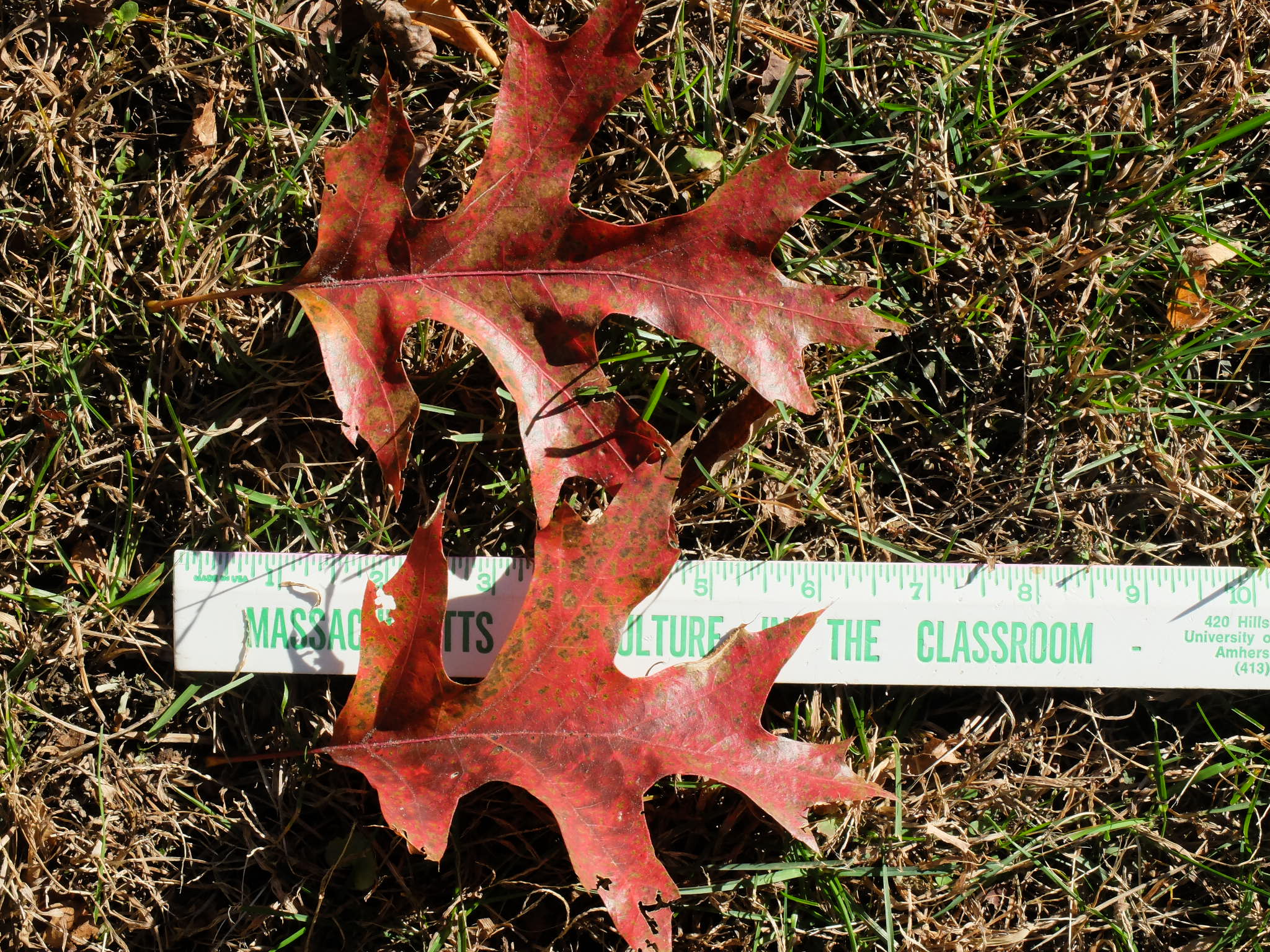
Scarlet Oak, Quercus coccinea grows to be 60 to 75’ in height. The simple leaves are 3” to 6” long, with 7 bristle-tipped lobes. The sinuses (space between lobes) are deep and often referred to as “C” -shaped. In autumn, after the leaves of many plants have fallen off, Scarlet Oak, Quercus coccinea provides a later coda of color with hues of yellow and/or rich scarlet.
Later this month and sometimes even into the winter Scarlet Oak, along with other oaks and some of their botanical family members, the beech trees, may retain a few of their dead, brown leaves attached to the tree’s stems. This is referred to as marcescence and might be more frequently seen on lower branches, on younger individuals.
…But my heart goes out to the oak-leaves that are the last to sigh “Enough,” and lose their hold;
Edna St. Vincent Millay
They have boasted to the nudging frost and to two and thirty winds that they would never die,
Never grow old…
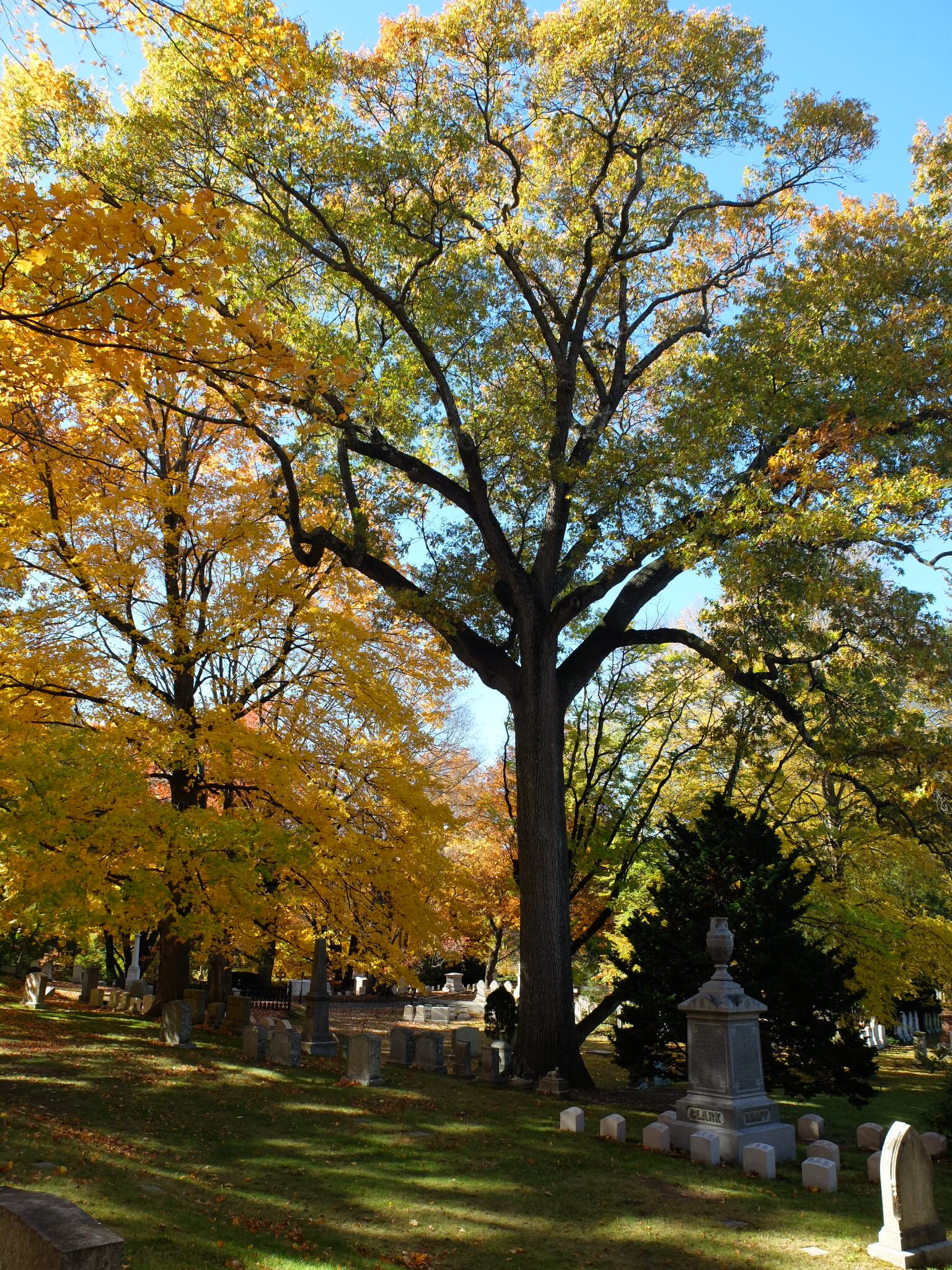
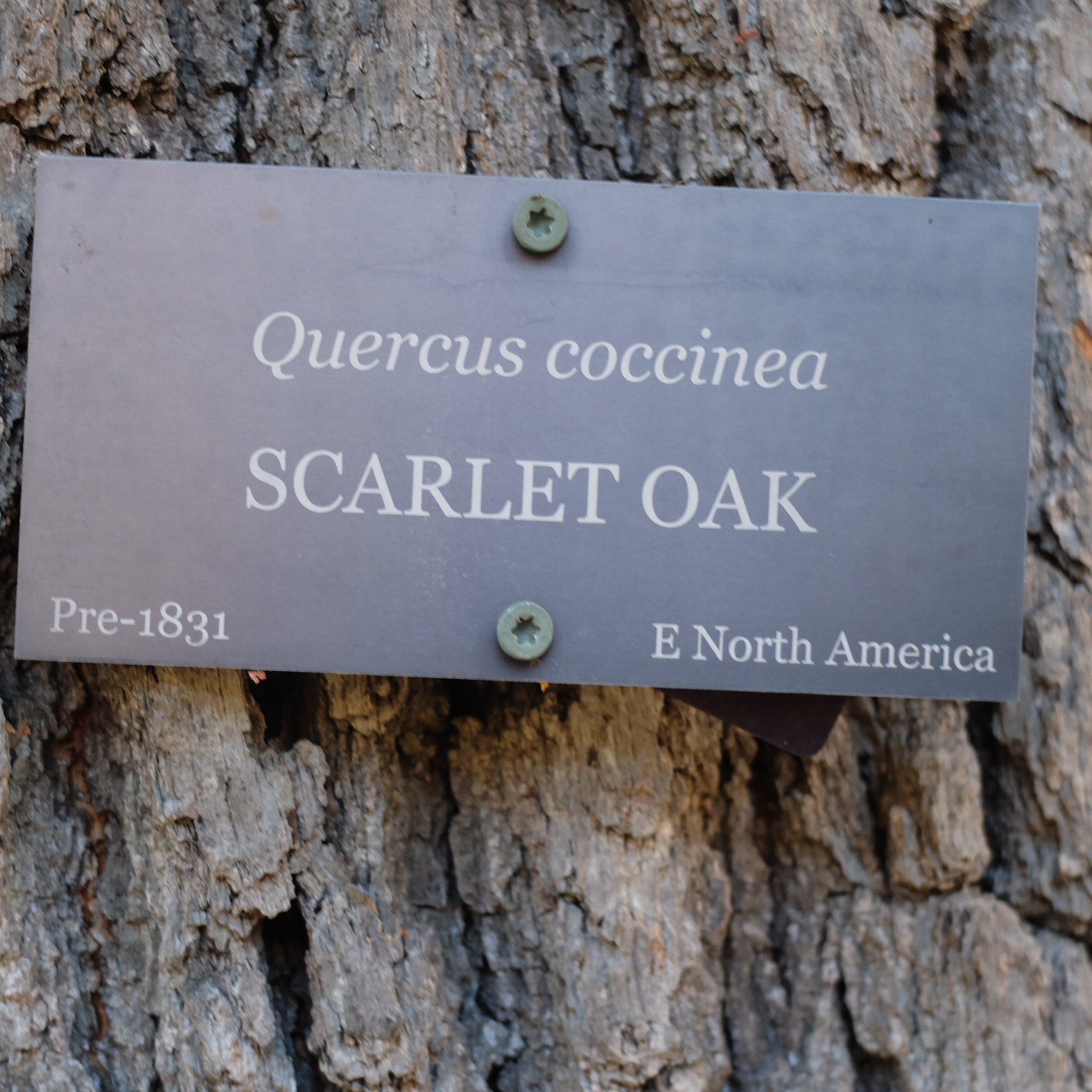
Of special note, we grow three Scarlet Oak, Quercus coccinea on Iris path, Lime Avenue and Fir Avenue which date from the 1831 founding of Mount Auburn Cemetery. On your next visit here, look for these majestic monarchs, along with our other Scarlet Oaks on Central Avenue, Crystal Avenue, Elm Avenue, Viburnum Avenue, Pond Road, Meadow Road, Daphne Path, Narcissus Path, Petunia Path, Vine Path and Curfew Path, among other locations.
Comments
Comments for this post are closed