
Prophecies of the Land: A Conversation with Juls Gabs
Jessica Bussmann January 15, 2026 Art
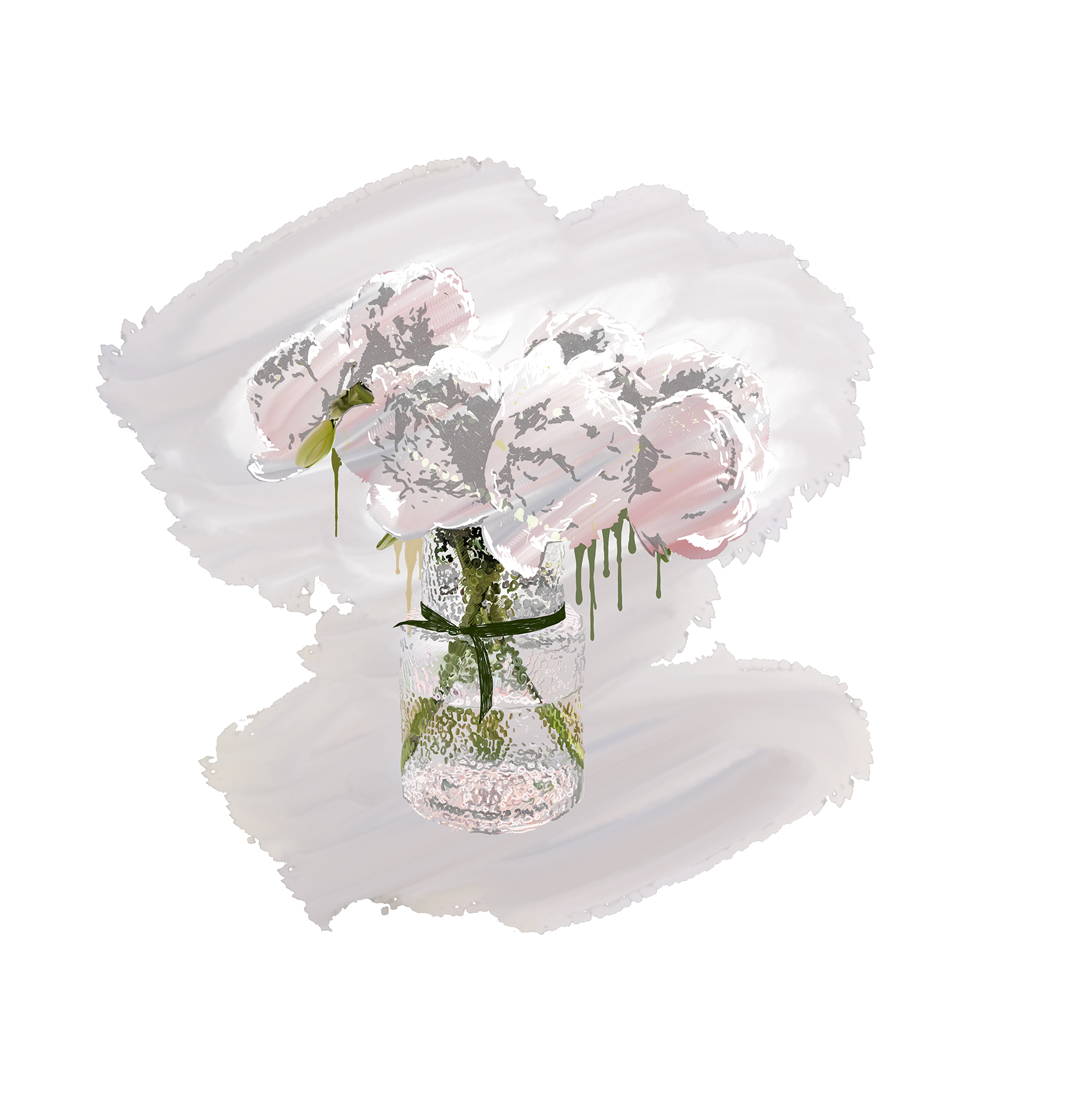
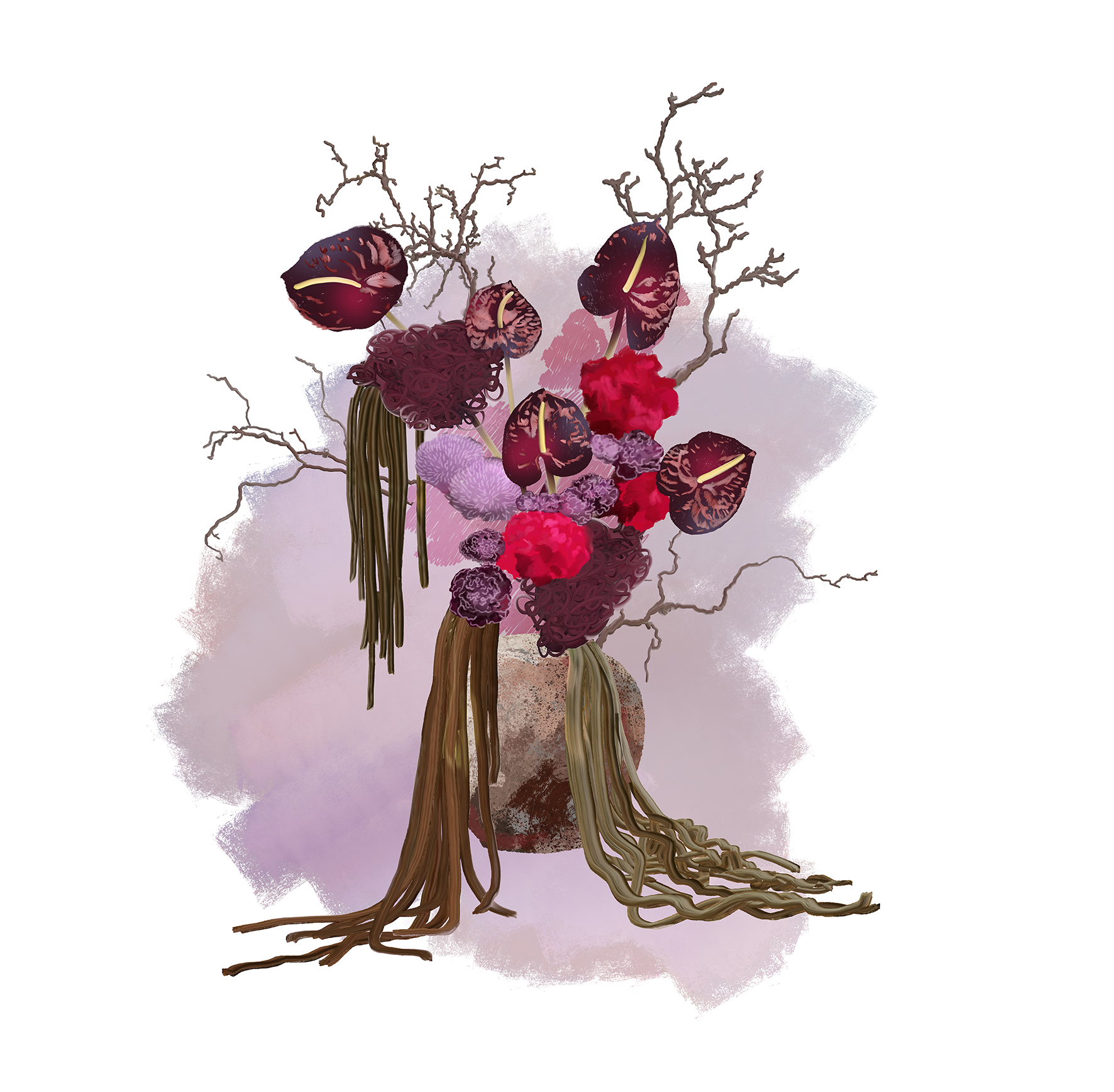
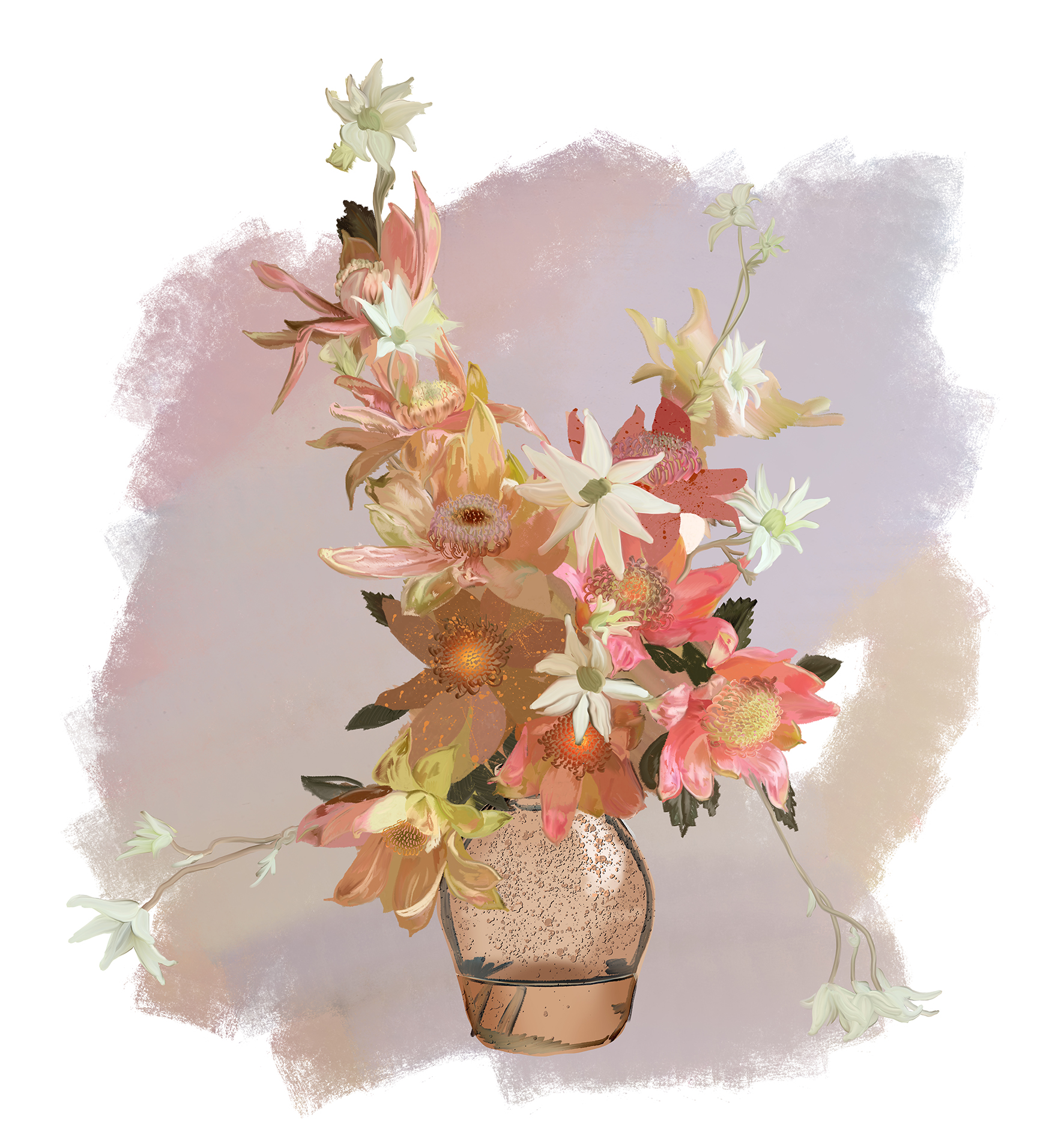
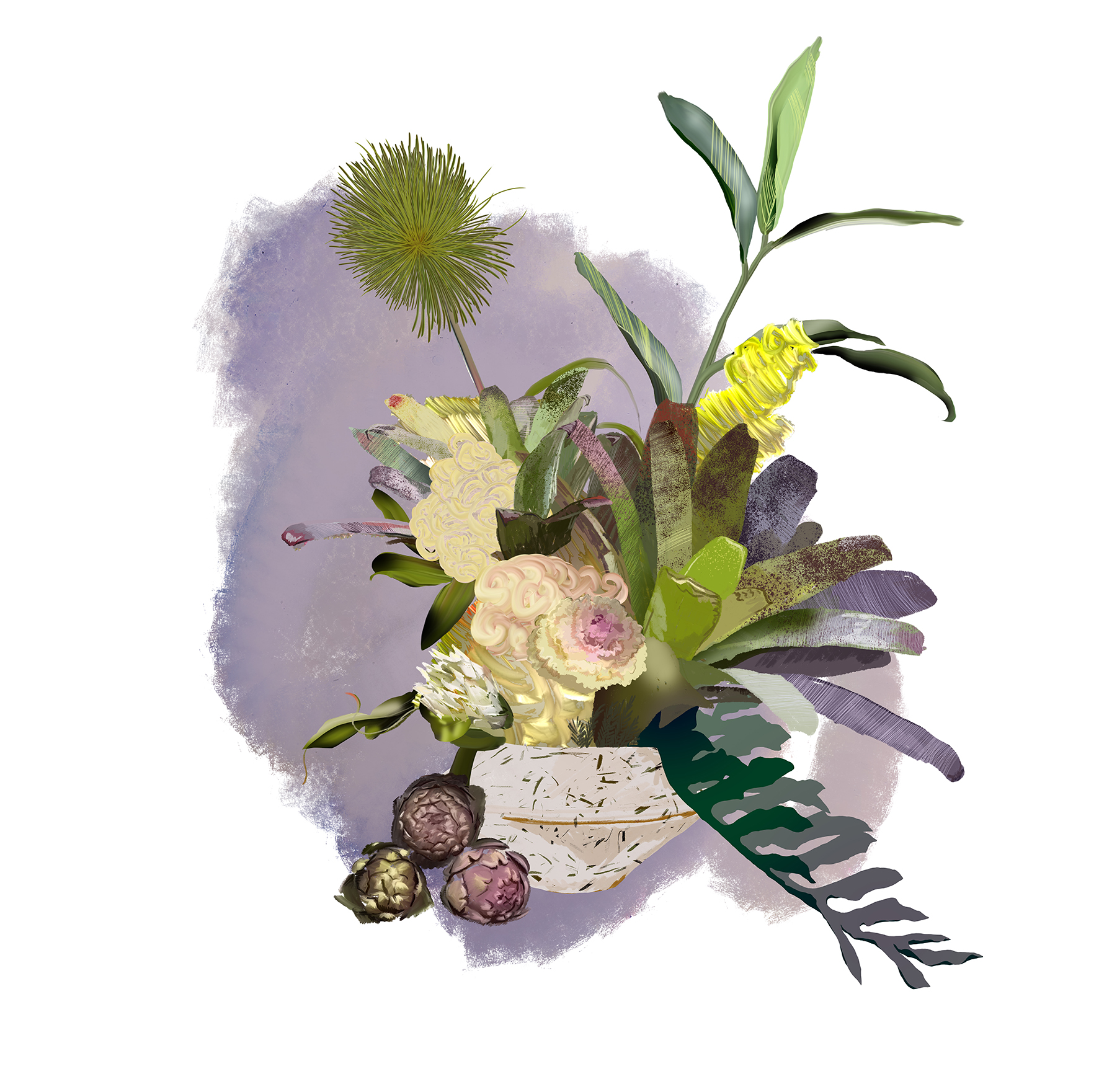
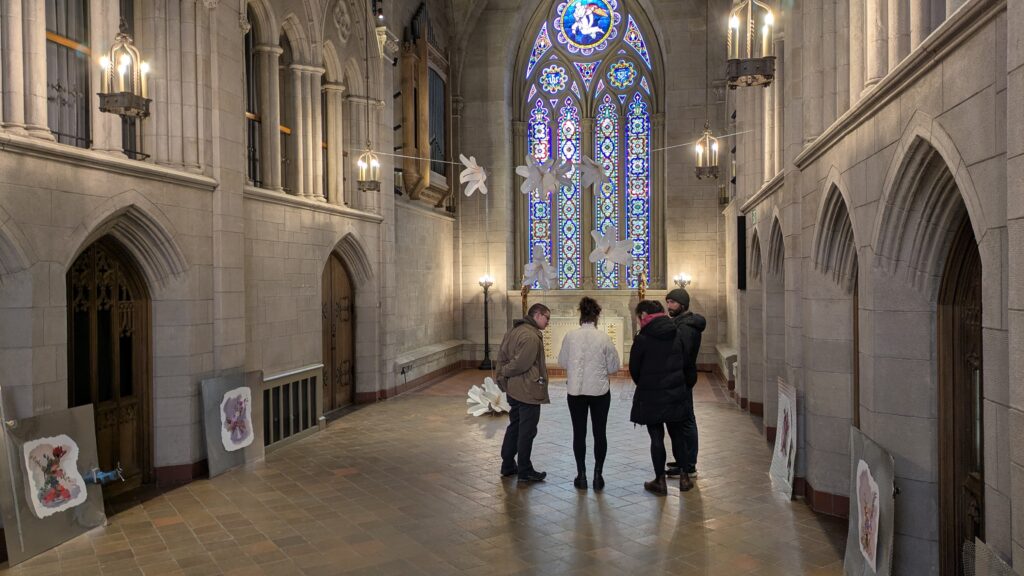
Meet 2025-2026 Artist-in-Residence Juls Gabs. Over the weekend of January 10-11, visitors who stepped inside Bigelow Chapel were immersed in the work that Juls created during her residency at Mount Auburn. Through a series of suspended Fabriano paper flowers, still life paintings and media objects visitors explored the concept of Mount Auburn as a living, evolving ecosystem. Blending classical painting traditions with contemporary digital techniques, Prophecies of the Land invites reflection on our relationship with nature and time. Mount Auburn becomes both a subject and collaborator - a place where memory, transformation, and the future land converge.
What is your creative process like? Do you start with research, an image, an idea, or an inspiration?
I am a site-specific artist, so each project begins with the space itself — its physical qualities, its history, and its symbolic meaning. At Mount Auburn, the land and its layered narratives were the primary influence. From there, the work translates into metallic installations and digital paintings on paper.
The recurring themes in my practice are nature and society. As both feel increasingly fragile and at risk of decline, it feels essential to reinvent how we speak about and portray them through art — not nostalgically, but as evolving, living systems.
Can you explain your digital painting process and how organic materials inform your methods? What is it about this medium that works for your expression as an artist?
My background is rooted in traditional studio and gallery practice. However, from the beginning, I designed my ideas digitally — using Photoshop as a sketchbook — and later translated them into physical paintings or sculptures.
In 2019, I realized that what I was producing in the studio were essentially copies of works that already existed digitally. That moment allowed me to liberate myself from the obligation of physical painting and to honor the digital work as the original.
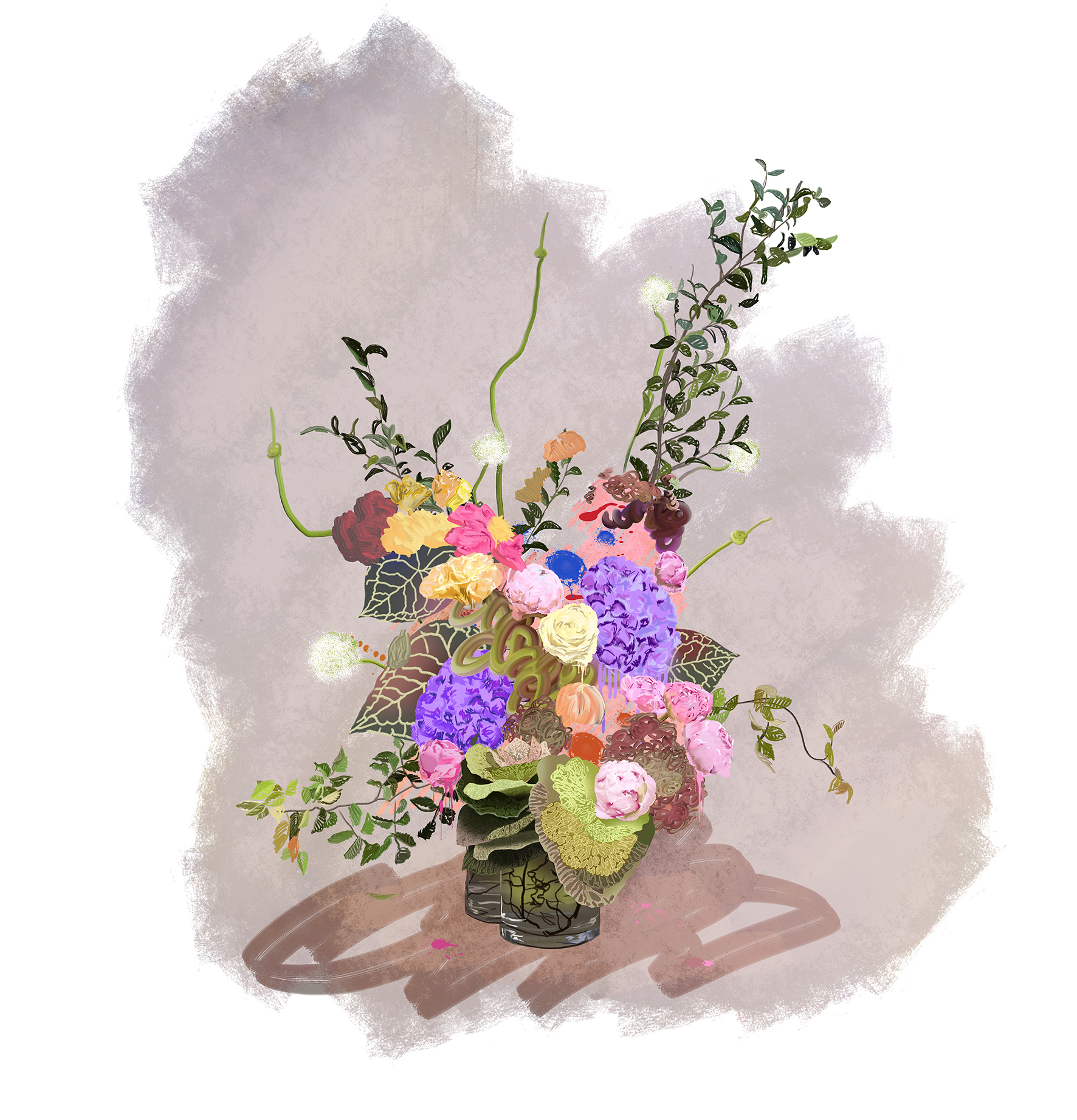
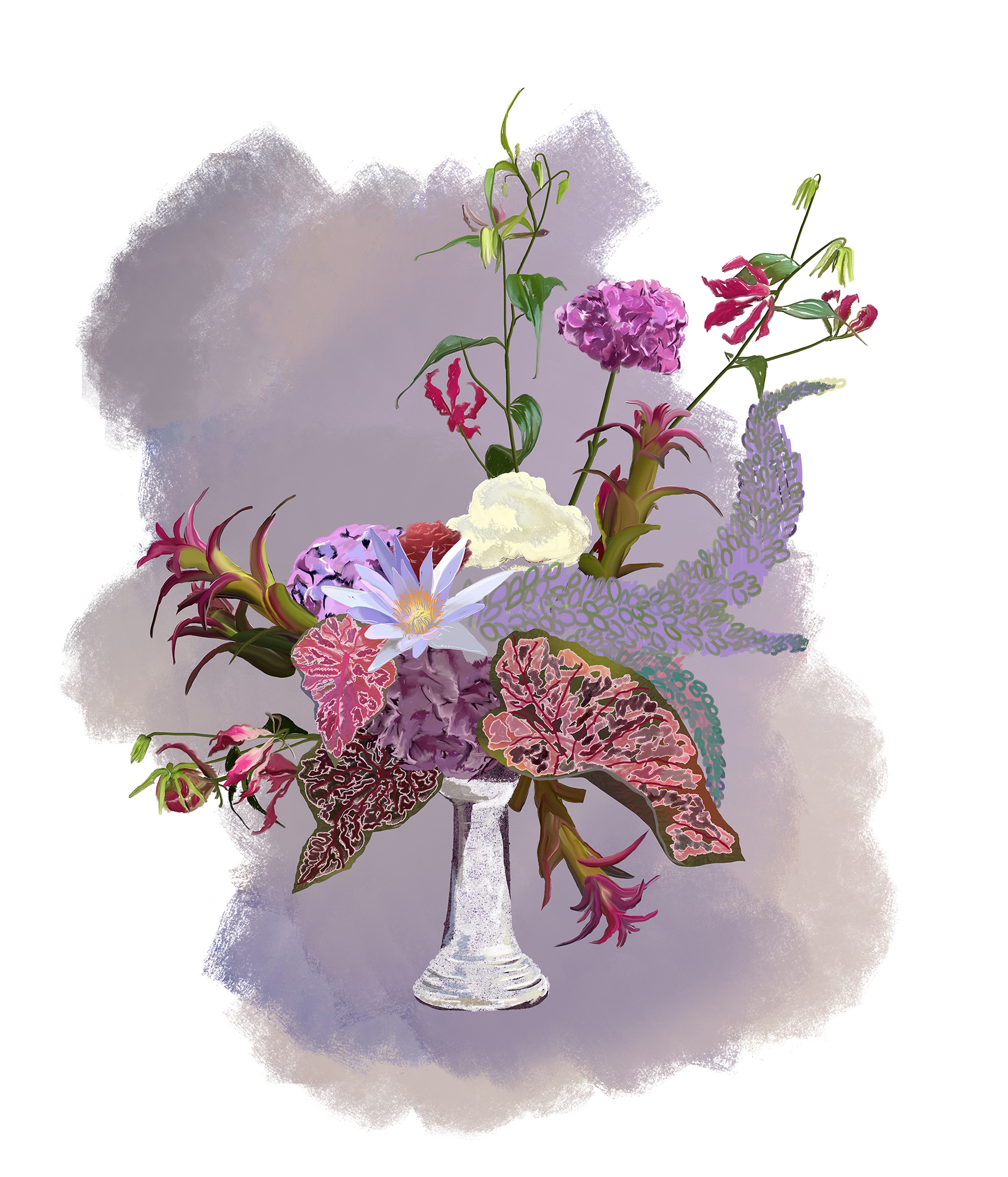
Over more than a decade, I’ve developed my own digital brushes and techniques, allowing me to emulate traditional media such as oils, pastels, watercolors, and pencils, alongside distinctly digital processes. This hybrid language has become an incubator for experimentation, generating physical installations that combine traditional materials with digitally manipulated or printed elements.
Can you share how your experiences visiting Mount Auburn’s landscape informed your work for Prophecies of the Land?
This project was inspired by a personal experience at Mount Auburn, when I encountered thousands of migrating tadpoles overtaking the pathways while walking with my family. It was an overwhelming moment of pure, unfiltered nature.
That experience made me realize that the ground itself is the true center of life — constantly recycling energy, history, and memory into new forms. Prophecies of the Land reflects on this idea, imagining how the land continues to evolve beyond human presence.
In speaking with guests during the exhibition, what themes resonated most? Were there questions or observations that surprised you?
Many visitors were curious about the interaction between industrial materials, such as metal, and the delicacy of paper, as well as the decision to place the paintings directly on the floor.
The floor is central to my practice. Influenced by exhibitions at the Whitechapel Gallery in the 1970s and 80s, and artists like Phyllida Barlow, placing work on the ground removes hierarchy. Art is no longer above the viewer — it exists at the same physical level. Art is not above us; art is us.
Another recurring conversation centered on fracture — ripped paper edges, piercing, sewing, and cutting. By breaking into materials, I try to connect the digital and physical worlds, allowing the fracture itself to become a point of connection. The tension between industrial aesthetics and organic forms also resonated strongly, echoing the idea that nature always finds a way through artificial structures.
How does Bigelow Chapel enhance the story you are telling through this work?
Bigelow Chapel was the perfect space for this exhibition. The work reflects a positive rethinking of passing — not as loss, but as transformation. The land recycles our energy into new forms of life: tadpoles, flowers, animals, trees. The chapel’s quiet, reflective atmosphere allowed that idea to be felt rather than explained.
What is your favorite experience, memory, or interaction from your time at Mount Auburn?
My favorite moments were the quiet, unexpected conversations — with visitors who lingered, shared personal reflections, or discovered connections between their own experiences and the work. Those exchanges reminded me that art fully comes alive through presence, listening, and shared time.
_____________
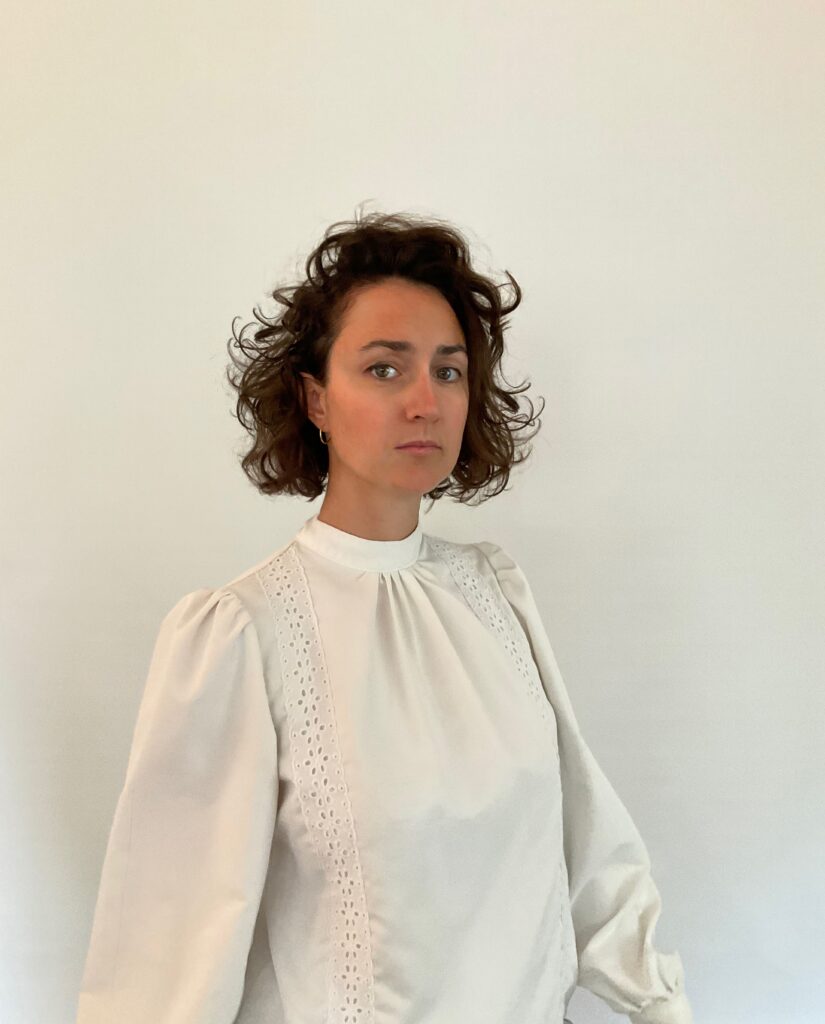
Juls Gabs is a digital painter and media artist who redefines traditional painting by merging classical influences with contemporary digital methods. Her work has received notable awards and grants including the European Research of New Creative Spaces in new media and the Revelation Artist Prize Mayte Spinola, among others. Her work has been featured in numerous group exhibitions across the world including the USA, the Netherlands, Belgium, the U.K., Sweden, Spain, and France. Her solo exhibitions include works for HallSpace Boston, Onstream Gallery (Rome), Unit 1 Gallery | Workshop (London), Sala Miguel Hernandez (Madrid), and Casa de Cultura Navacerrada (Madrid). She has held former artist residencies in Belgium, Germany, the U.K., and Japan.
Comments
Comments for this post are closed