
Horticultural Highlight: Heptacodium miconioides, seven-son flower
Jim Gorman September 1, 2026 Plants & Wildlife
Throughout our landscape are frequently found species with surprising ornamental note. With “back to school” time upon us, we encourage you to begin a weeks-long focus upon the still almost unknown Seven-son Flower, Heptacodium miconioides.
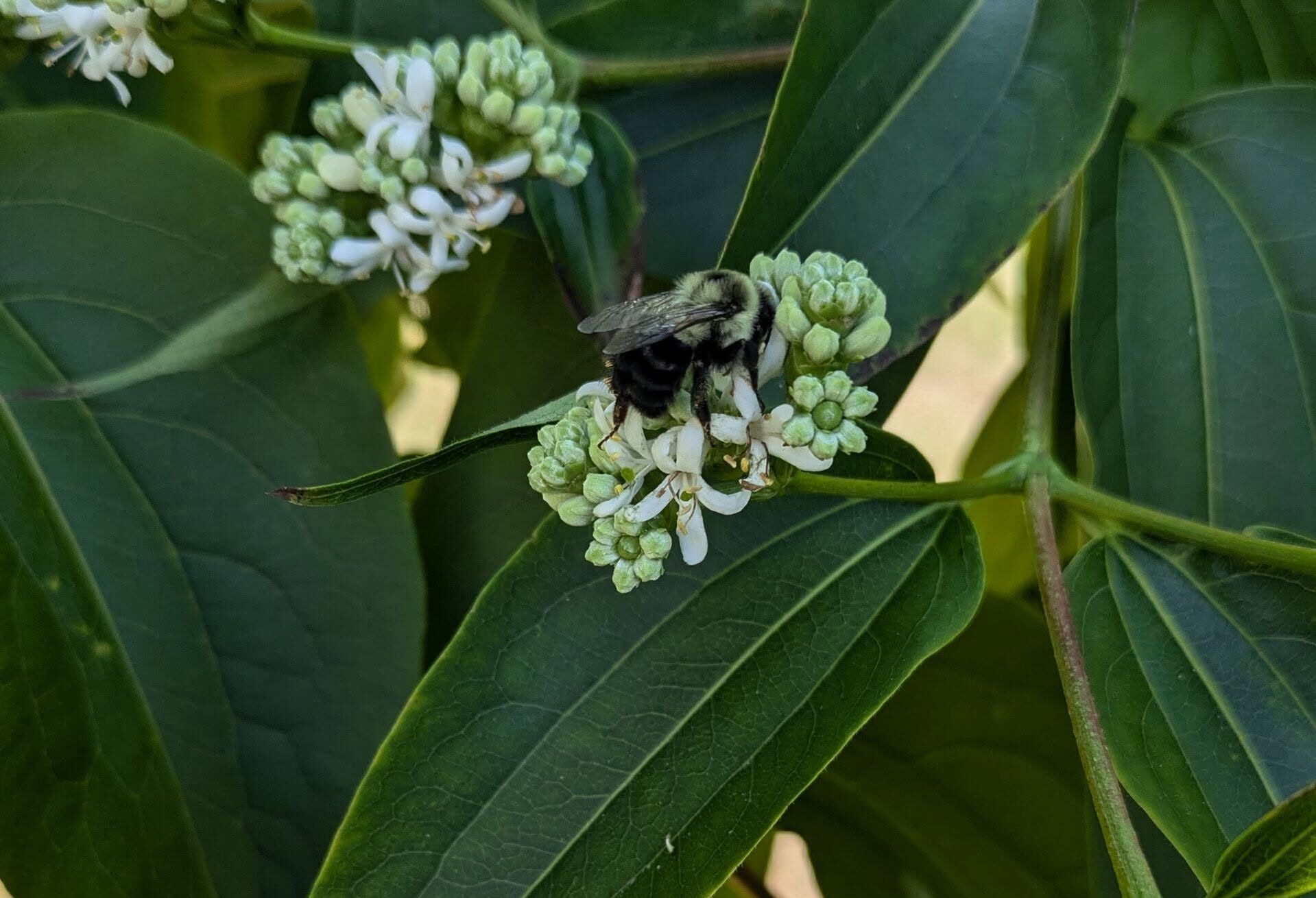
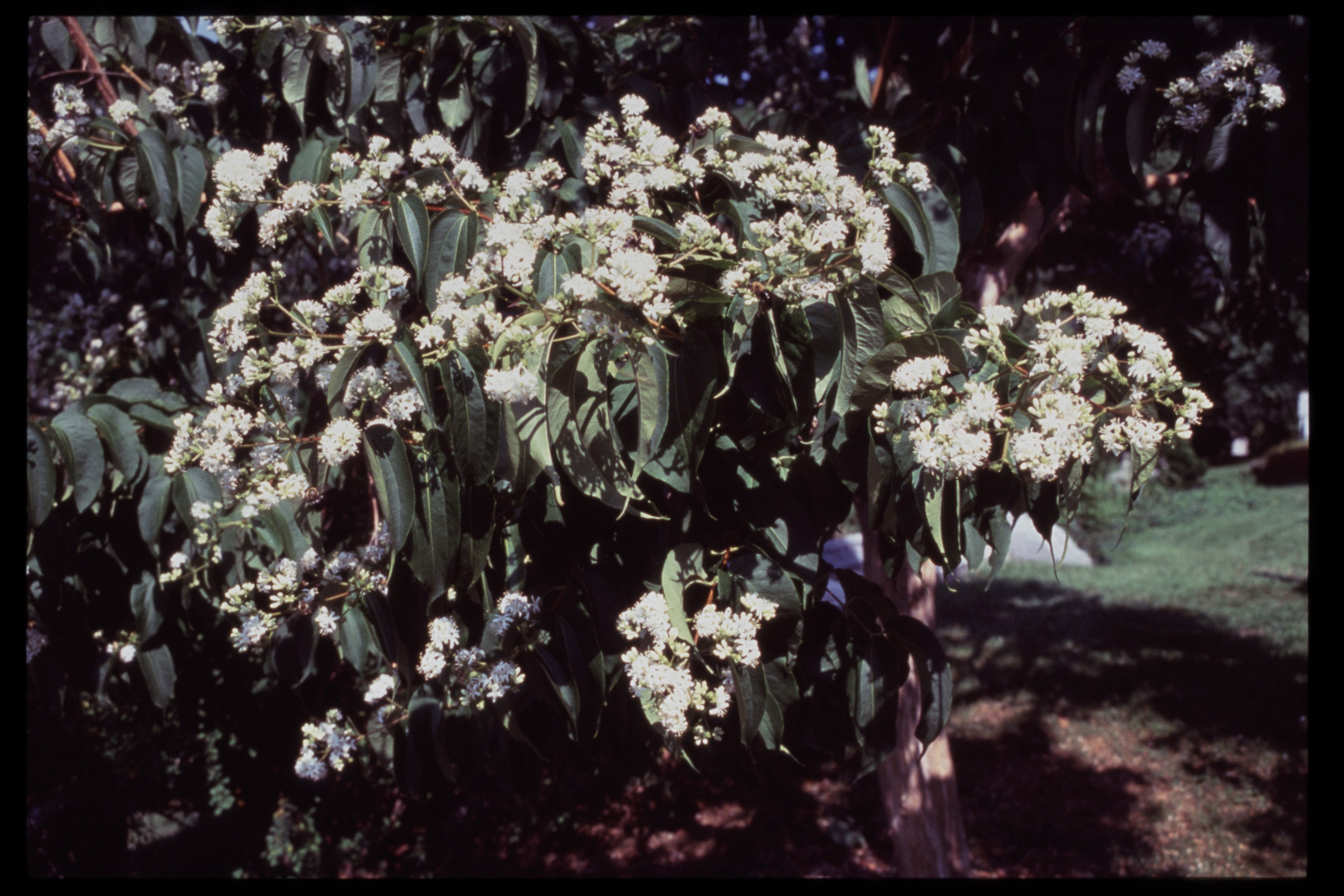
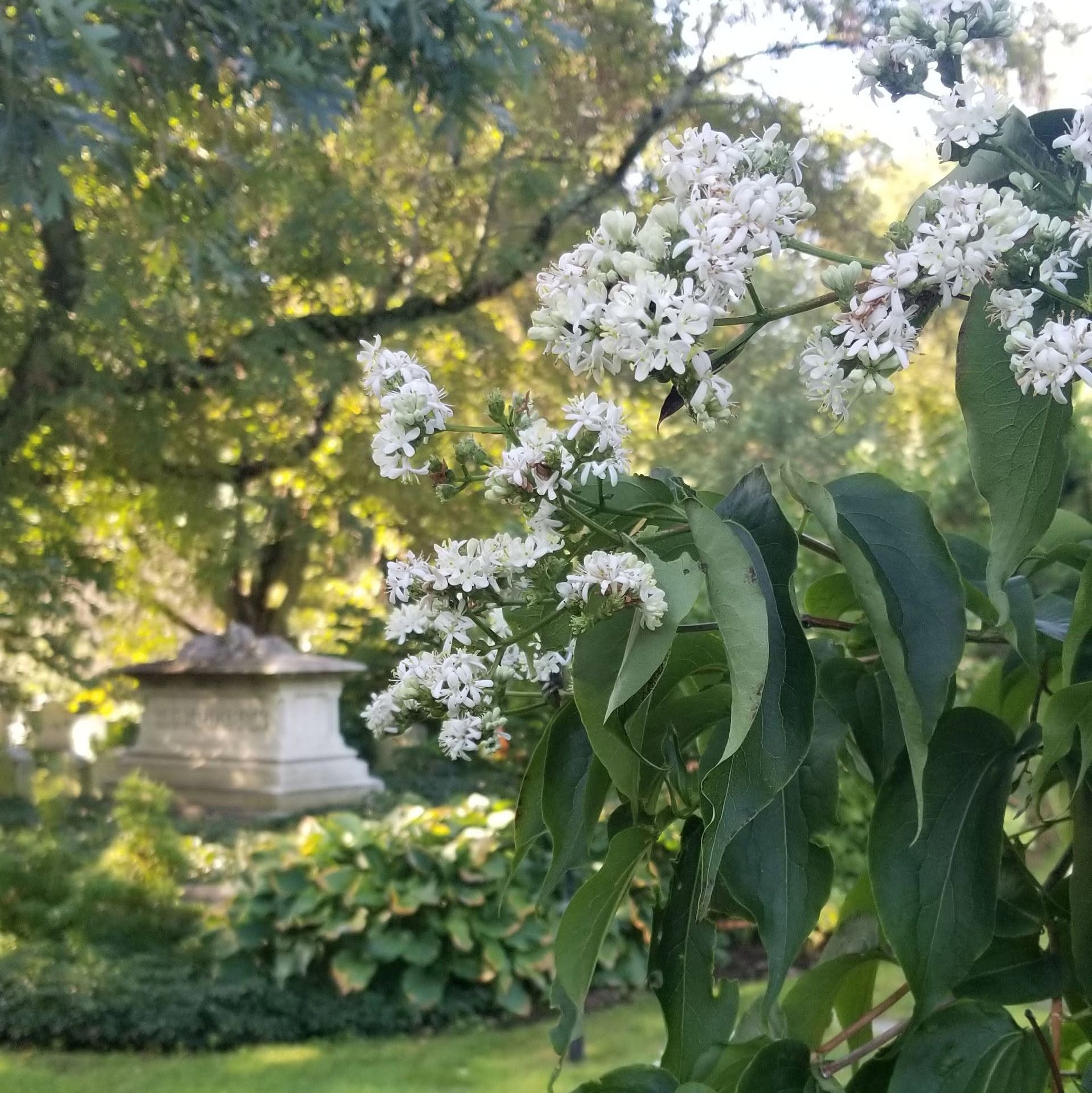
This 10-15 foot-tall, deciduous, upright, small tree/large shrub begins blooming in late August and September. This later timing of flowering provides nectar for bees, butterflies, insects and hummingbirds long after most other shrubs and trees have finished flowering.
Its diminutive, white, deliciously fragrant flowers occur in whorls of six surrounding a central seventh blossom, a thyrse-like panicle. The genus Heptacodium was named by renowned taxonomist Alfred Rehder (1863-1949) using the Greek hepta for seven and codium as poppyhead. Flowering may last 4 to 6 weeks in full sun settings, with less abundance when grown in the shade.
The leaves are 3 to 6-inches long and 2-inches wide, have an entire margin (non-toothed, non-lobed edge), with rounded bases and pointed tips. The handsome, dark-green leaves with pairs of distinct parallel veins, occur opposite each other, are pest and problem free, and persist into November without a colorful foliage display.
“…but if a plant has beautiful leaves it is, I think, the best reason for growing it.
Beth Chatto
If it has good flowers as well, that makes two good reasons.”
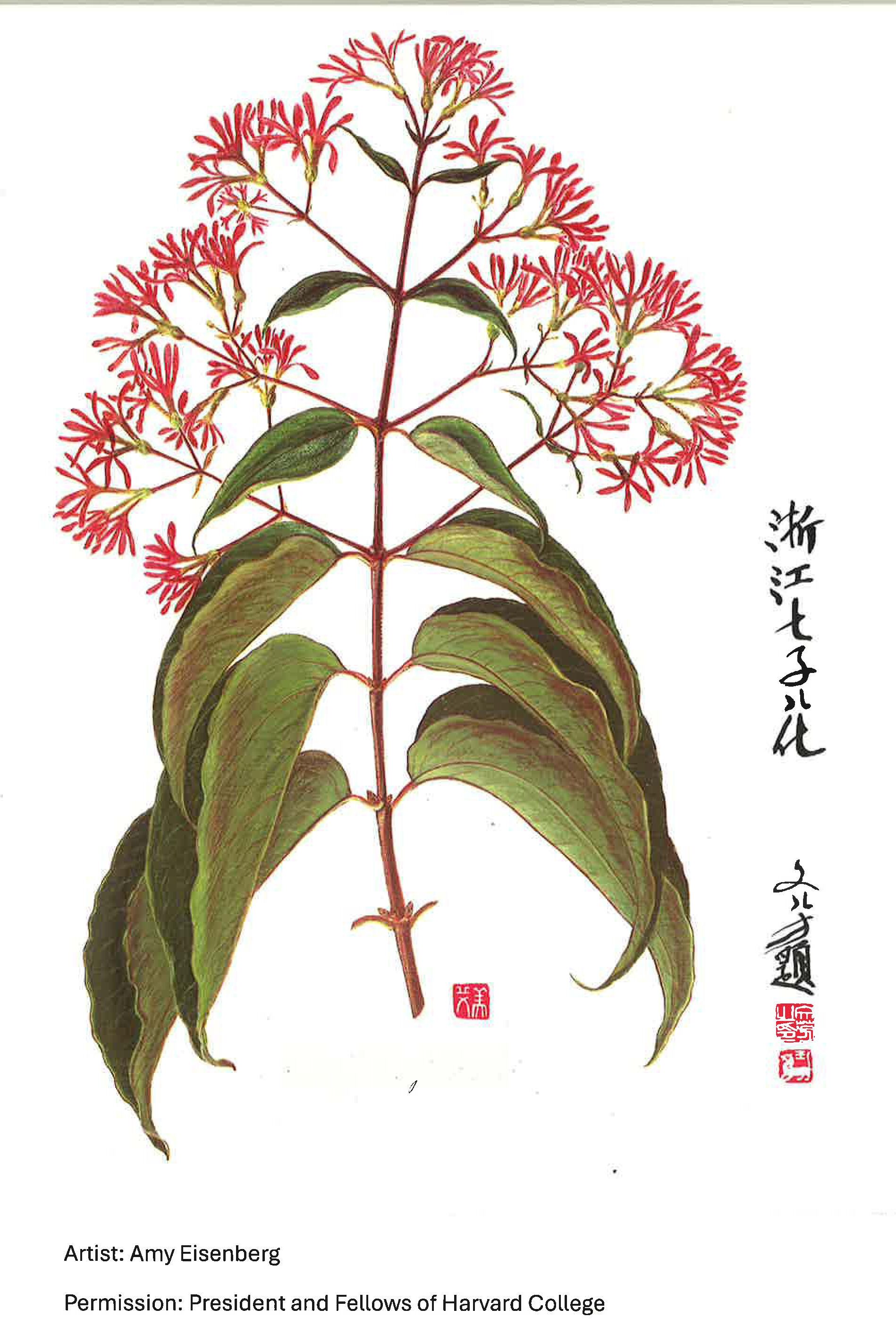
Yet, there is a more outstanding display which is uniquely provided by the sepals of the flowers. Sepals on many flowers are visually inconspicuous, foliage-like elements outside of the petals that sometimes persist as a fruit matures (think of the five tiny sepals on the bottom of an apple). Heptacodium sepals surrounding its flowers also begin as tiny and green. These sepals persist, elongate, quadrupling in size, and change color, green, to rosy-pink, to vivid red, mimicking a second bloom of a different color and more spectacular than the white flowers.
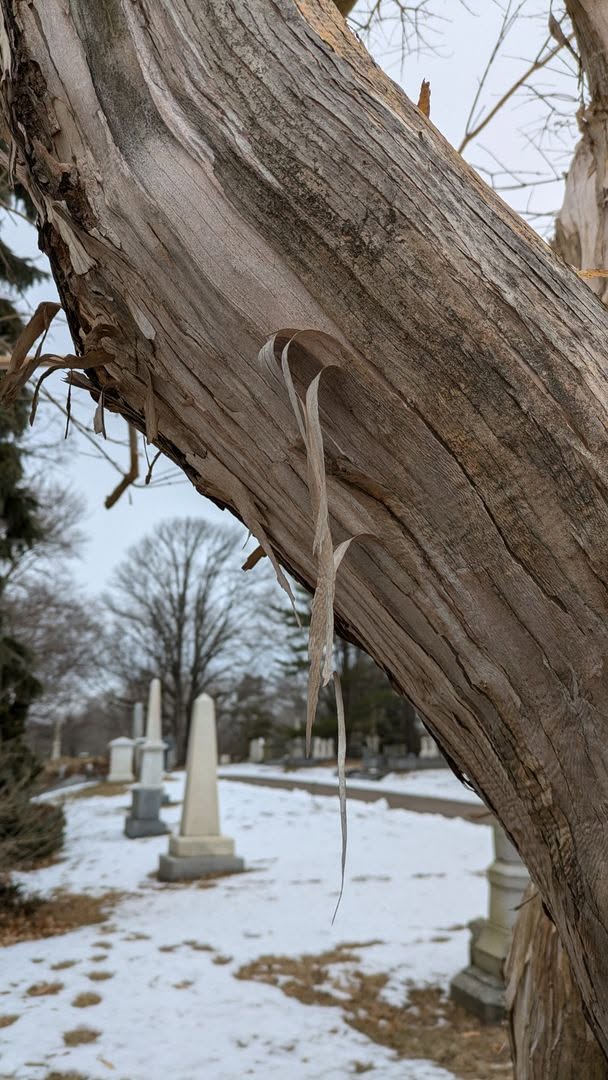
Additionally, the light, tan-colored bark exfoliates in small strips producing a striking effect with heightened ornamental value in the winter landscape. Thus Seven-son Flower, Heptacodium miconioides is truly a multiple-season interest plant. This has been affirmed by its being a winner of the Cary Award, an award created to recognize underutilized woody plants for New England that exhibit superior landscape appeal in two or more seasons, are pest resistant, and available for use. Heptacodium has also been recognized by the Royal Horticulture Society’s Award of Garden Merit (AGM) and the Pennsylvania Horticulture Society’s (PHS) Gold Medal Plant.
Native to China, Heptacodium was first collected for Western science in 1907 as herbarium (cut and pressed dry) specimens by the prolific plant explorer Ernest Henry Wilson (1876-1930) on his third of four remarkable Chinese expeditions. Viable seed was not collected in 1907. It was only after seeds collected during the 1980 Sino-American Botanical Expedition which included the Arnold Arboretum of Harvard University that several plants eventually grew there in Boston.
Mount Auburn received our first Heptacodium plants from the Arnold Arboretum in 1988, and two of them continue to grow at Willow Avenue and at Lime Avenue. Additionally, Seven-son Flower may be found at Birch Gardens, Raven Path, Bigelow Avenue and Spelman Road. All in flower during September, but try to also view them in their October sepal displays.
Comments
Comments for this post are closed