
Horticulture Highlight: Spotted Cranesbill, Wild Geranium, Geranium maculatum
Jim Gorman April 28, 2026 Plants & Wildlife
I was the slightest in the house-
Emily Dickinson
I took the smallest room-
At night, my little lamp, the book-
And one Geranium-…
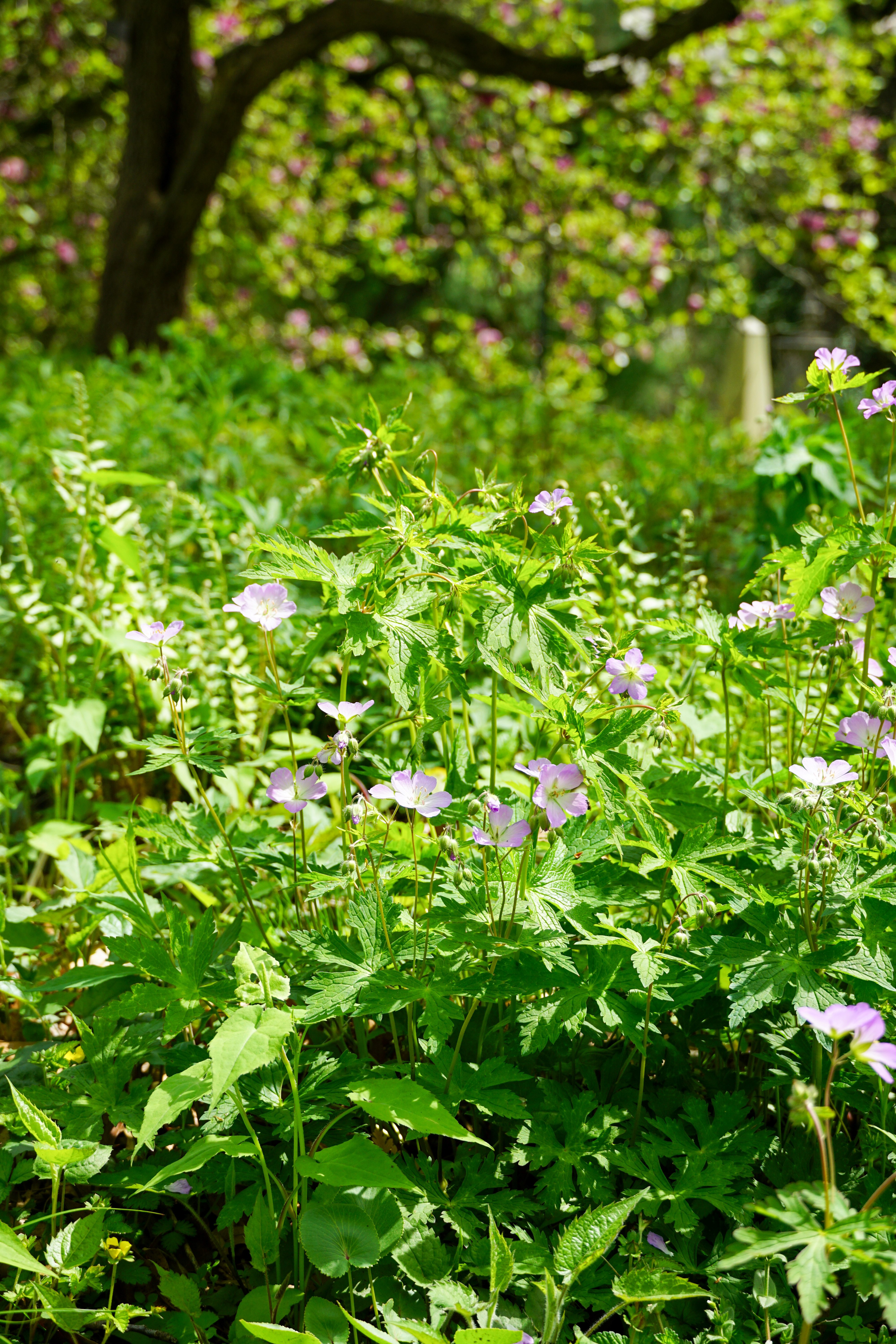
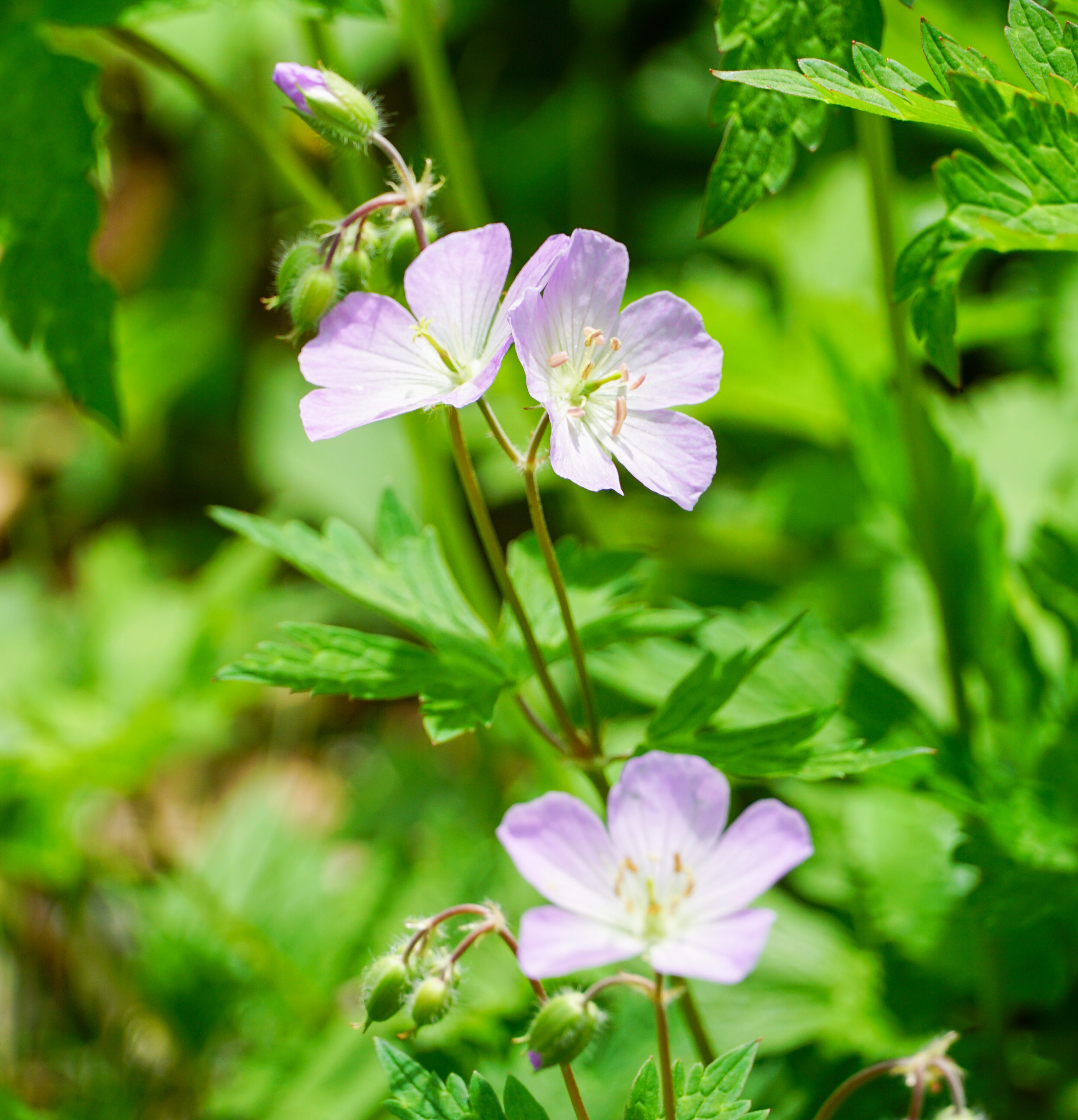
The one geranium, within the poem, likely was our eastern North American and New England native, Spotted Cranesbill, Wild Geranium, also called Cranesbill, Geranium maculatum. This grew in her Amherst neighborhood, the surrounding woods and probably in her own planted garden. Additionally, we may refer to Emily Dickinson’s (1830-1886) herbarium of 424 pressed specimens, now held in the Houghton Library of Harvard University. Published as a book, by Harvard University Press in 2006, Emily Dickinson’s Herbarium, has therein on page 15 her collected and botanically confirmed, Spotted Cranesbill, Wild Geranium, Geranium maculatum.
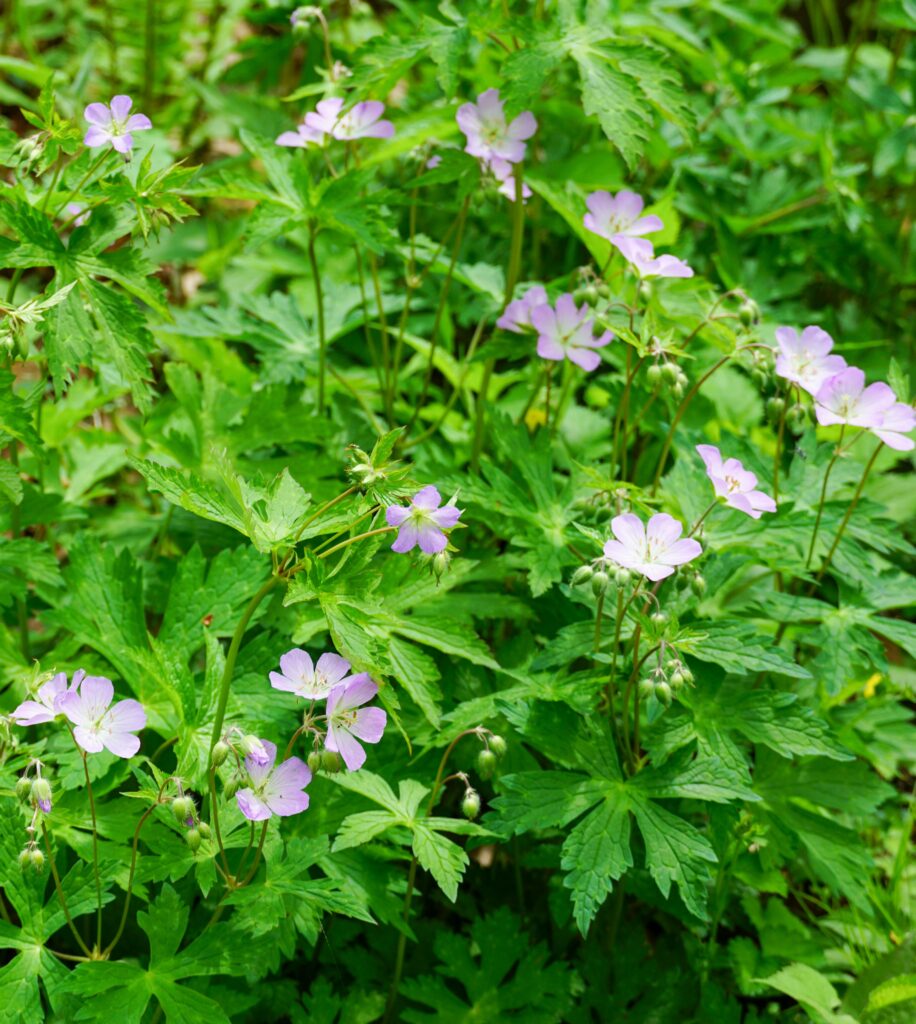
The genus Geranium, within the Geraniaceae (the Geranium family), is large with at least 420 species of perennials and/or annuals primarily native to temperate Asia, Europe and North America. Geranium is derived from the Greek word for crane which refers to the similarity of the beaked fruit to the bill of a crane. Spotted Cranesbill, Wild Geranium, Geranium maculatum have attractive one-to-two-inch lavender to rose-purple flowers, occurring in loose clusters above the leaves, during the spring and early summer. Its leaves are four-to-five-inches, grayish-green, sometimes spotted, with 3-7 deeply toothed lobes. This low-maintenance, clump-forming plant, often self-sows as well as spreads by creeping rhizomes creating an effective groundcover.
For wildlife value we quote from www.illinoiswildflowers.info/woodland/plants/wild_geranium
“The nectar and pollen of the flowers attract bumblebees, mason bees (Osmia spp.), cuckoo bees (Nomada spp.), long-horned bees (Andrena spp.), and other bees. An Andrenid bee Andrena distans, is a specialist pollinator (oligolege) of Wild Geranium (Geranium maculatum). The flowers also attract Syrspid flies, dance flies (Empis spp.), butterflies, and skippers. Other insects feed on the leaves and other parts of Wild geranium. This includes leaf-mining larvae of the beetle Pachyschelus purpureus, Acyrthosiphon malvae (Geranium Aphid) and Macrosiphum geranii (Wild Geranium Aphid), Metriorrhynomiris dislocates (Yellow Plant Bug), burrowing bugs (Sehirus spp.), stink bugs (Euschistus spp.), and ebony bugs (Corimelaena spp.). The caterpillars of some moth species also feed on Wild Geranium and other Geranium spp., …”
Regarding geraniums, unfortunately it sometimes may also be asked, when is a geranium not a geranium? Of course this refers to publicly familiar so-called geraniums, sold voluminously for window-boxes and flowerbeds. These are in the genus Pelargonium, not true geraniums.
Be all of that as it may, on a visit later in May, to Mount Auburn look for some of our Spotted Cranesbill, Wild Geranium or Cranesbill, Geranium maculatum on Indian Ridge Path and Azalea Path.
Comments
Comments for this post are closed