
Spotted Lanternfly in the Landscape
Mount Auburn Cemetery April 14, 2026 Plants & Wildlife
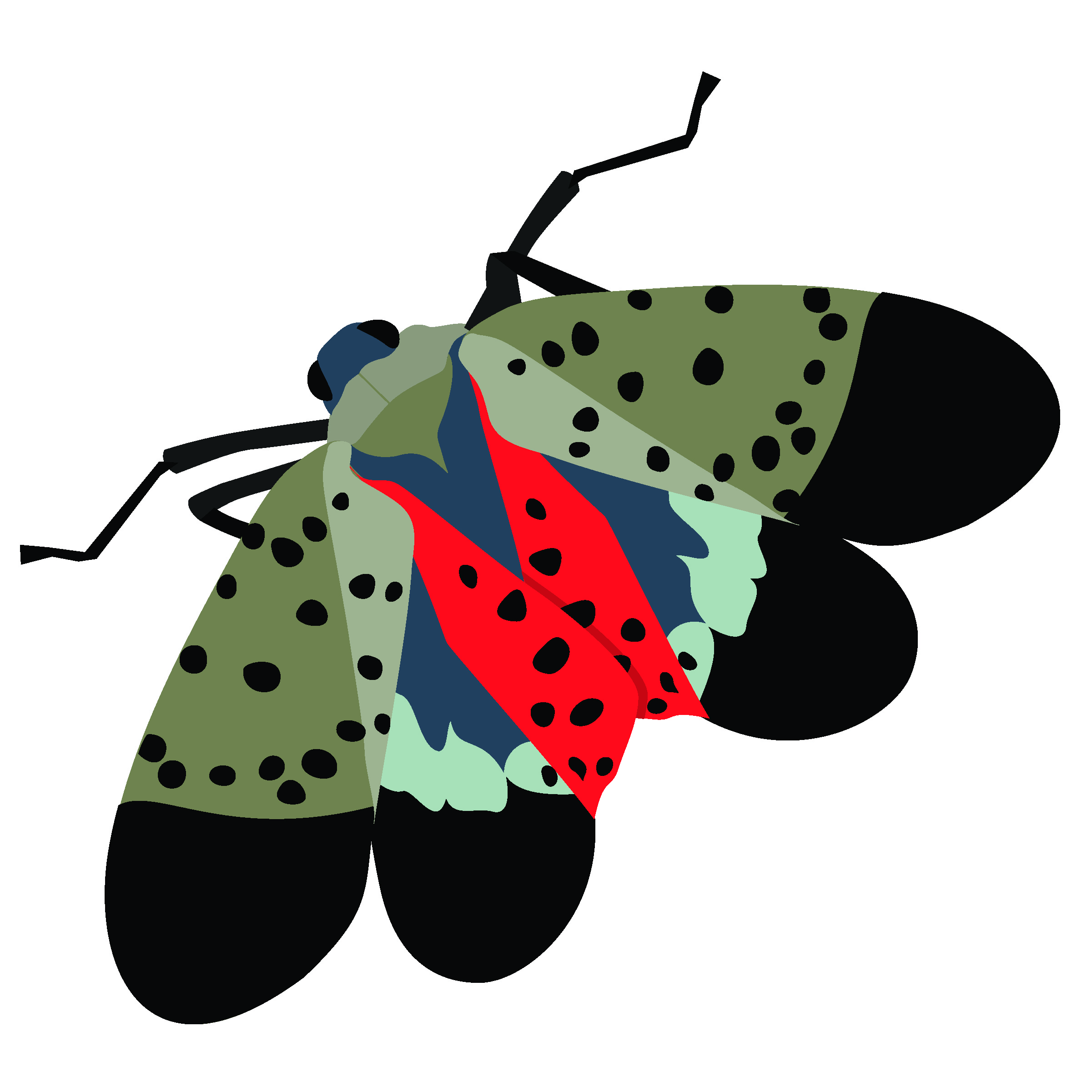
Spotted Lanternfly (SLF) was first identified at Mount Auburn Cemetery in August 2025, in the fourth instar nymph form. It has been moving north from Pennsylvania since it was first identified there as an invasive insect in 2014, having been imported unknowingly likely on shipments from China or Vietnam where it is native. SLF is of concern because of its extraordinary range of host plants, its multiple and overlapping life stages and prolific reproductive capacity, its strength as a hopper, lack of natural predators, tolerance to weather extremes, and its ability to use pretty much anything to hitch a ride on (cars, trucks, trains, etc), and to lay eggs on (from live plant material to anything made of wood, metal, stone, plastic or glass).
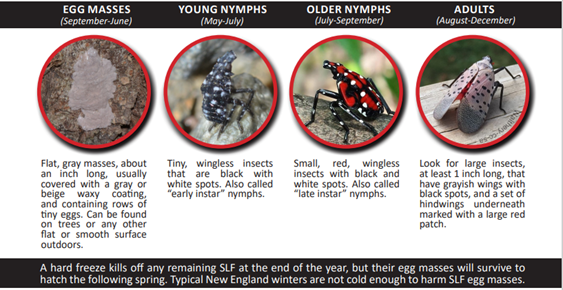
The insect’s life cycle starts around May with the hatching of nymphs in the first of four nymph stages (instars). The insect grows through these four instars over the summer, feeding on tender new-growth shoots of perennials and even some shrubs like roses. Especially in the early stages they are very small and hard to see. As nymphs they generally don’t kill plants, but they can cause damage due to feeding on new growth.
Winged adults can be seen from July through December. As adults, they become exceptional hoppers which allows them to reach higher off the ground and feed primarily on tall woody plant material like trees. Their plant of choice is the Ailanthus altissima (Tree of Heaven), which is an invasive tree in this region. Spotted lanternflies feed so heavily on Ailanthus that they can kill it. Research has also shown that when the insects have a chance to feed on Ailanthus, they tend to produce more eggs.
However, they do feed on many more trees, with some favorites including plants in the Grape family (including wine grapes, but also other plants like Virginia Creeper), Maples (especially Red, Silver and Norway), Walnut (especially Black Walnut), Willows, Poplars, fruit trees (including Apples, Cherries, Plums), as well as Sumac, Sycamore, Birches and Pines. All told, SLF feeds on 100 species and counting, according to The Massachusetts Department of Agricultural Resources (MDAR), and many of these species exist in our collection at Mount Auburn. Mostly these trees will likely not be killed by spotted lanternfly but may suffer noticeable damage leading to limb die-back, limb loss, impacts on tree structure, and more.
At this time there are limited treatment options for spotted lanternfly, especially in such large landscapes as Mount Auburn. While some treatments may be manageable on smaller sites or a backyard, the sheer quantity of insects and numbers of host plants overwhelms the capacity to treat with methods known to date. There is also no preventative treatment. Because it is such a prolific reproducer, once it appears in an area it can be assumed that it will spread rapidly and in large numbers. With no reliable way to manage the population, it’s still advisable to squash the bugs and scrape egg masses whenever possible.
Steps Mount Auburn is taking in response to the presence of spotted lanternfly on the landscape include:
- Tracking its progress across the landscape to be aware of where the highest infestations are expected
- Making a concerted effort to remove all ailanthus weeds from the landscape (this is already a known weed here)
- Specific inspections of known primary host trees (like black walnut, willows, certain maples), and follow-up actions on infested trees as needed (like pruning limbs, etc)
- Staying up to date with industry advances as research with spotted lanternfly continues.
It’s also worth noting that although this insect has had a huge wave of invasion in the U.S. since 2014 with no natural predators, there are indications that nature is beginning to balance things out: some other insects, birds, spiders and bats have been seen feeding on spotted lanternfly, for example. They have yet to make a significant impact on the population, but this is a change from earlier years where they were actively avoided.
For more information: https://www.mass.gov/spotted-lanternfly

MDAR requests anyone seeing spotted lanternfly should report it through this link: https://massnrc.org/pests/pestFAQsheets/spottedlanternfly.html
Mount Auburn notified MDAR last August when the first nymph was spotted. MDAR staff came on site to inspect and were in touch with Mount Auburn Horticulture & Landscape department.
Comments
Comments for this post are closed