
Horticulture Highlight: Acanthus sp., Bears Breeches
Jim Gorman June 30, 2026 Plants & Wildlife
…The lettuce splayed, if you will,
Paul Violi
In a Beaux Arts, derivative of classical acanthus,
And the roast beef, thinly sliced, folded
In a multi-foil arrangement…
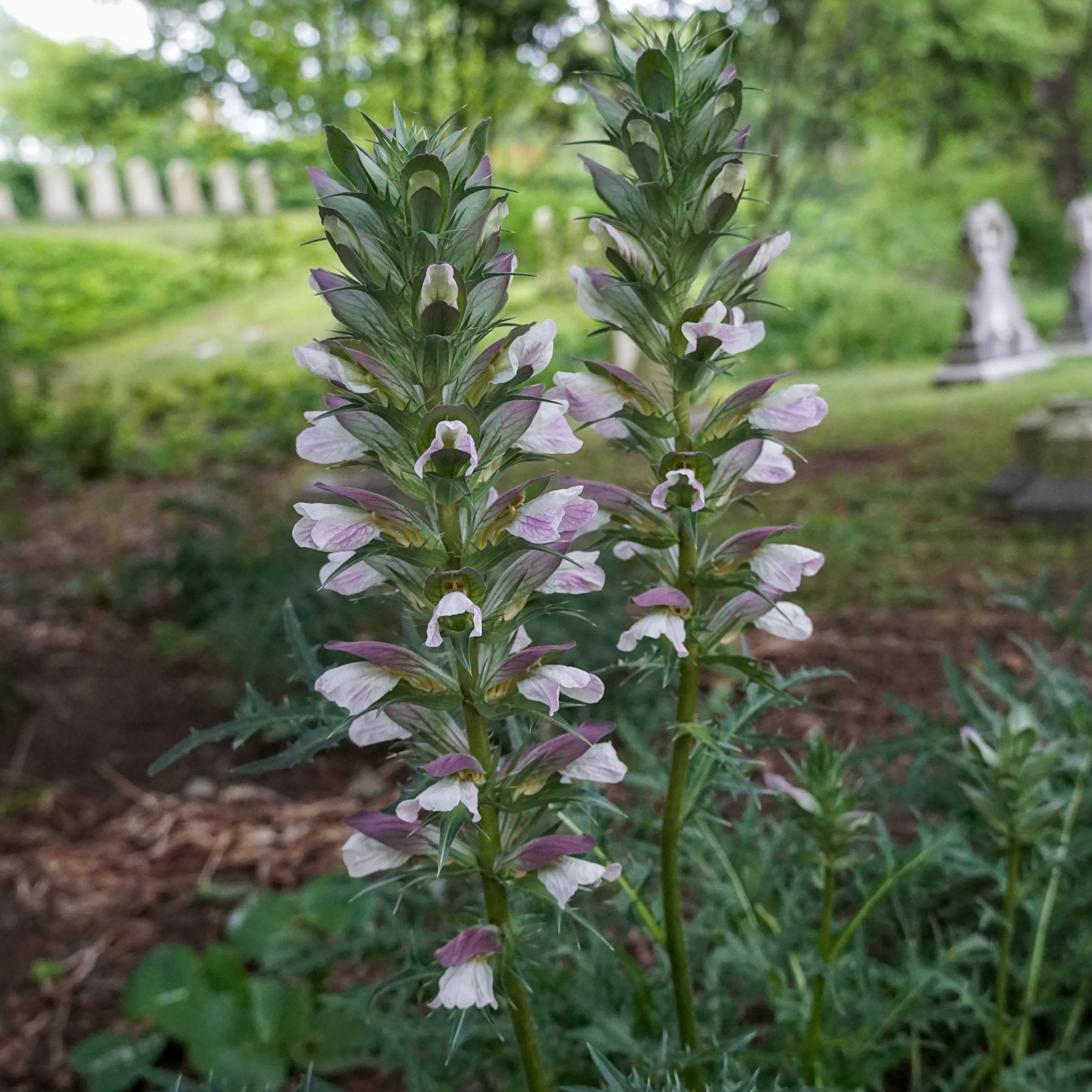
The genus Acanthus includes up to 29 species of perennials and subshrubs, native to the Mediterranean region, as well as to subtropical and tropical Asia and Africa. We grow Acanthus spinosus, Spiny Bears Breeches and the hybrid Acanthus ‘Summer Beauty’, Bears Breeches cultivar. Each of these display notable, broadly lobed, basal leaves reaching 2-feet long and one-foot wide. Acanthus spinosus, Spiny Bears Breeches as its name alludes to, have bristly tipped leaves, mean-looking but are soft and non-penetrating. The flowers of both of these Acanthus are pinkish white, occurring on eye-catching 1 1/2 – 2-foot spikes, blooming in late July into August.
Acanthus sp. are recognized plants from antiquity. They appear in listings at the starting points of documented botanical knowledge. Greek philosopher, naturalist, Theophrastus (372-c. 287 BC), whom Carl Linnaeus (1707-1778), called “the father of botany” included them in his Historia Plantarum. Three hundred-plus years later, Dioscorides (40-90 AD), Greek physician, pharmacologist, botanist also wrote of Acanthus sp. in his De materia medica (On Medical Material). Countless references to these two botanical classics continued over millennia up to the 1597 publication of The Herbal or General History of Plants by John Gerard (1545-1612) that likewise included Acanthus sp.
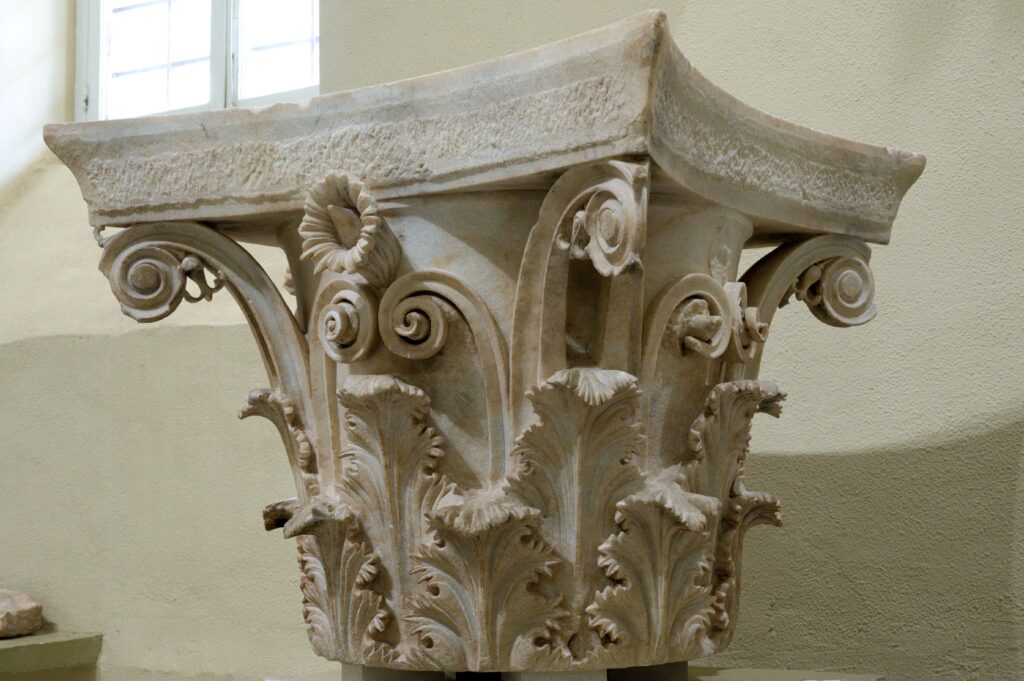
In addition to inclusion in early botanical study, Acanthus sp. became immortalized as their leaf images inspired the motif used in classical Greek and Roman architecture. During the 5th century BCE in Greece, the Corinthian Order was introduced, one example at the Temple of Apollo in Arcadia. Previously the Doric and Ionic Orders were favored by ancient builders. In architecture, an order comprises a column with a shaft, capital and usually a base. Corinthian Order is notably distinguished with fluted shafts and a bell-shaped capital, from which acanthus stalks/leaves emerge to support the horizontal lintel above. Countless buildings from a time immemorial have continued this architectural tradition of usage.
Boston’s renowned architect, Charles Bulfinch (1763-1844), Lot #2308 on Bellwort Path, used Corinthian Order on the front of our 1795-97 Massachusetts State House. Asher Benjamin (1773-1845), Lot 258, Cedar Ave., published several architectural builder’s guides, including instructional plates encouraging use of Corinthian Order. The United States Capitol building (1800-28) and Supreme Court building (1935) both in Washington DC display ornamental Corinthian Order on their front facades.

Beyond botany and architecture Acanthus leaf motif also crossed multiple cultures and centuries finding usage in art, textiles, jewelry, woodwork, furniture, and metalsmith ornamenting new environments for ever expanding audiences.
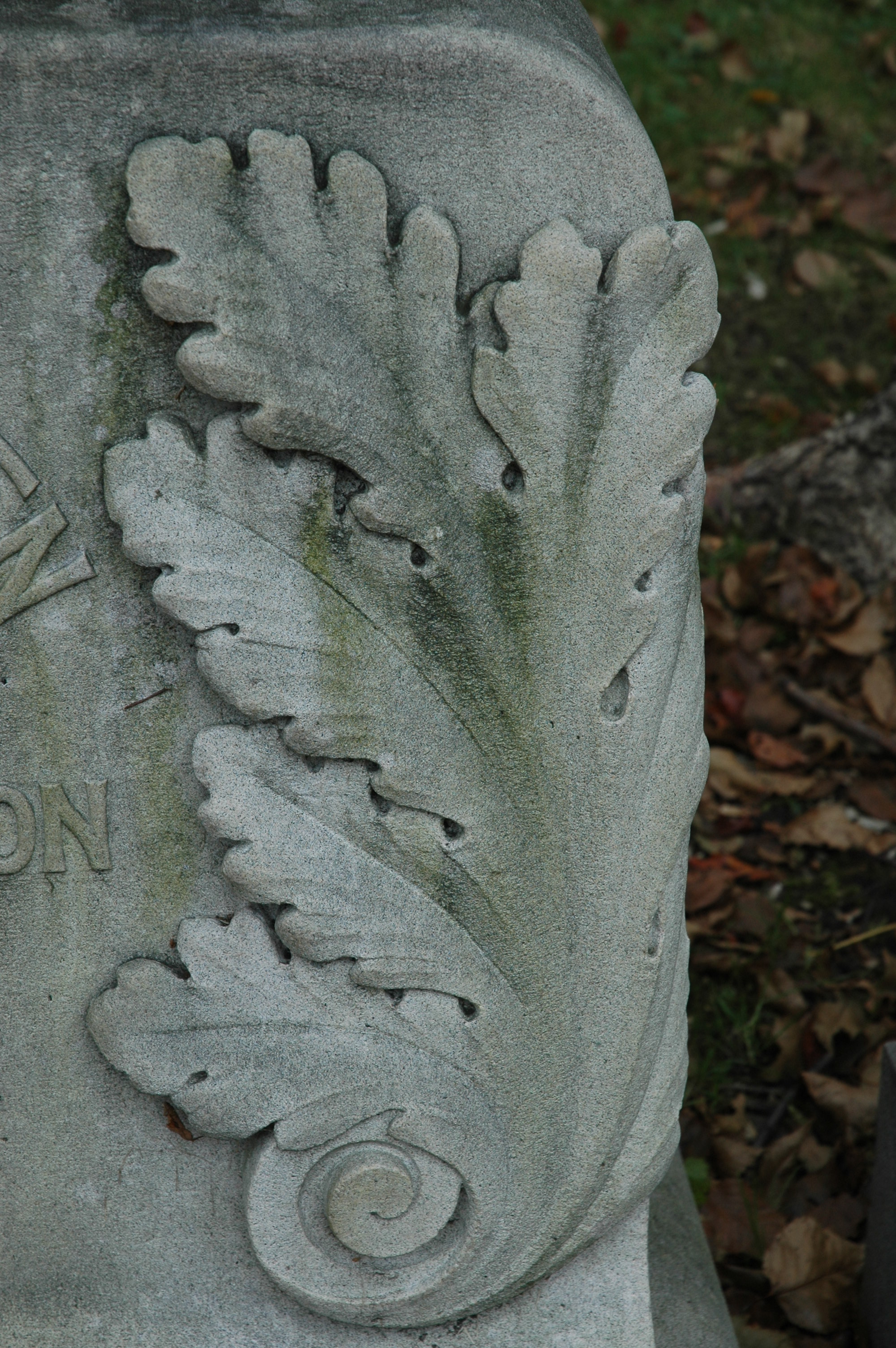
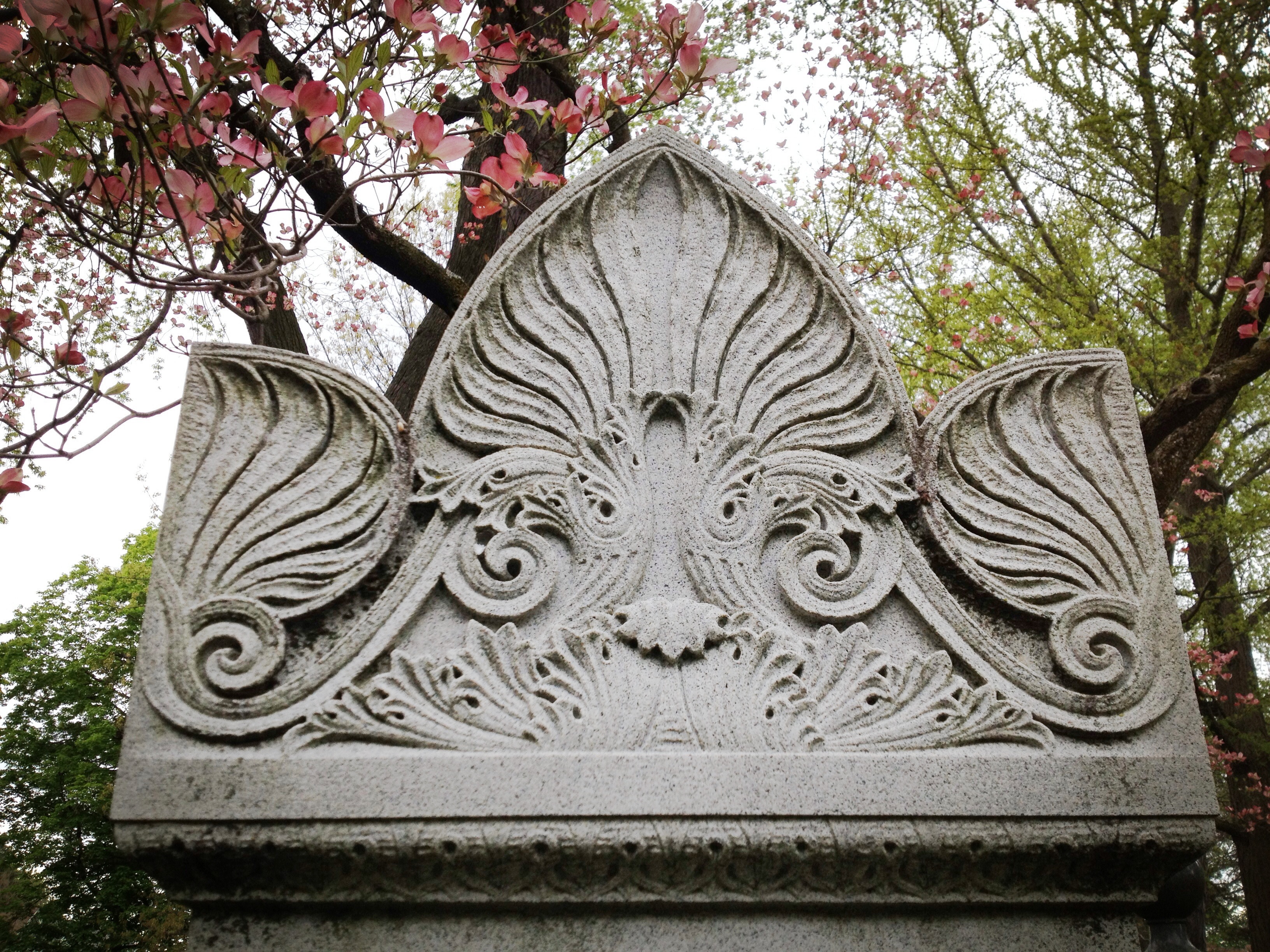
Within our specialized scope of cemetery symbols adorning monuments of graves, Acanthus leaves represent enduring life, immortality, heavenly gardens or heavenly wisdom as well as providing a fine arts decorative motif. An outstanding example found here at Mount Auburn is at the Scots' Charitable Society lot (#816) at the corner of Fir and Walnut Avenues. Here one will find a magnificent five-sided cast iron fence with two gates, originally built in 1847. This communal burial lot’s fence displays two images of St. Andrew, patron Saint of Scotland on gates, with Scottish thistles and crests and battle axes repeating themselves around the complete fence. Surmounted on the upper railing of the entire fence, alternating with the battle axe heads are repeated Acanthus leaves. The entire fence was completely restored last year, including refabricating and replacing missing finials above each gate. These finials also depict Acanthus leaves with an eternal flame.
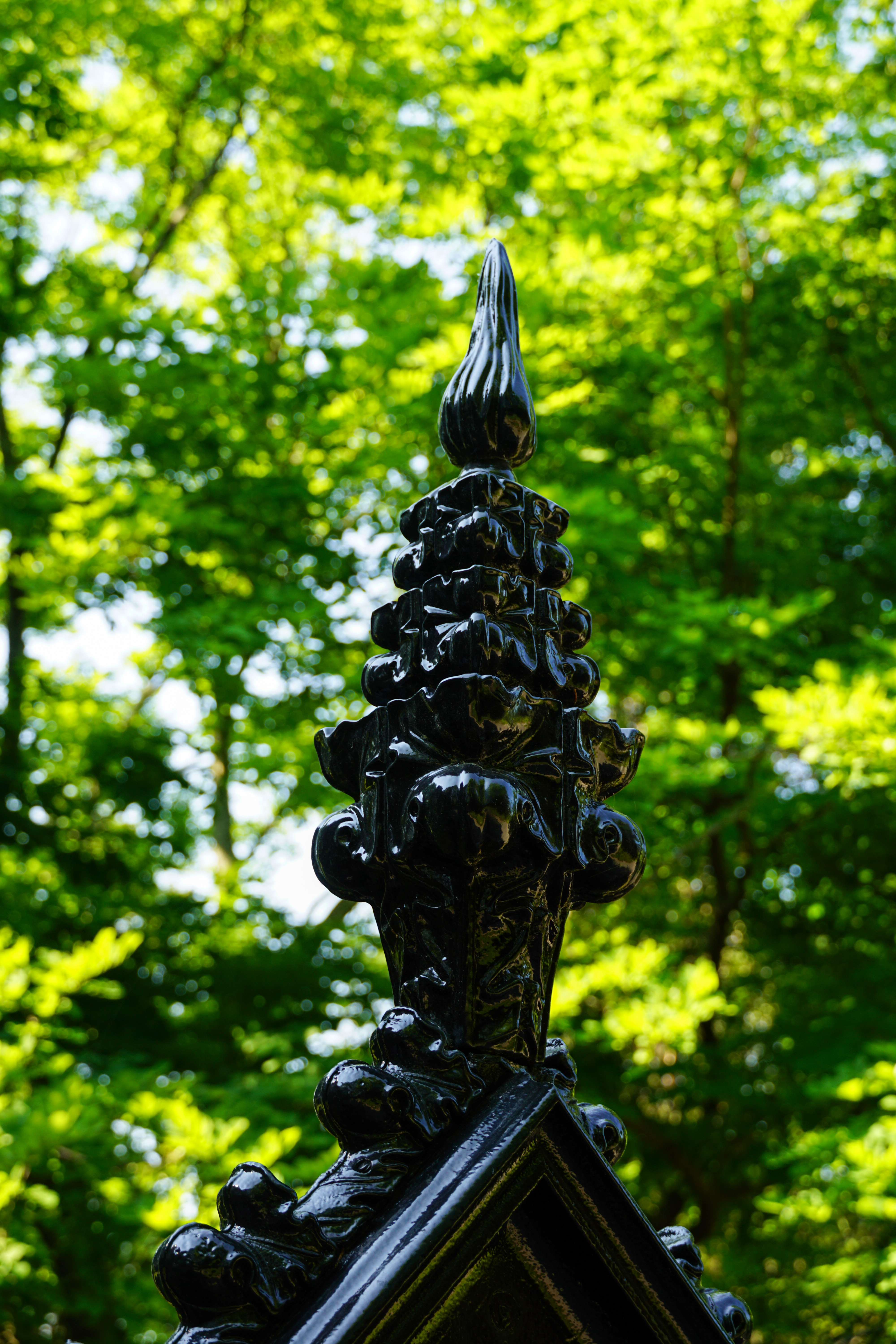
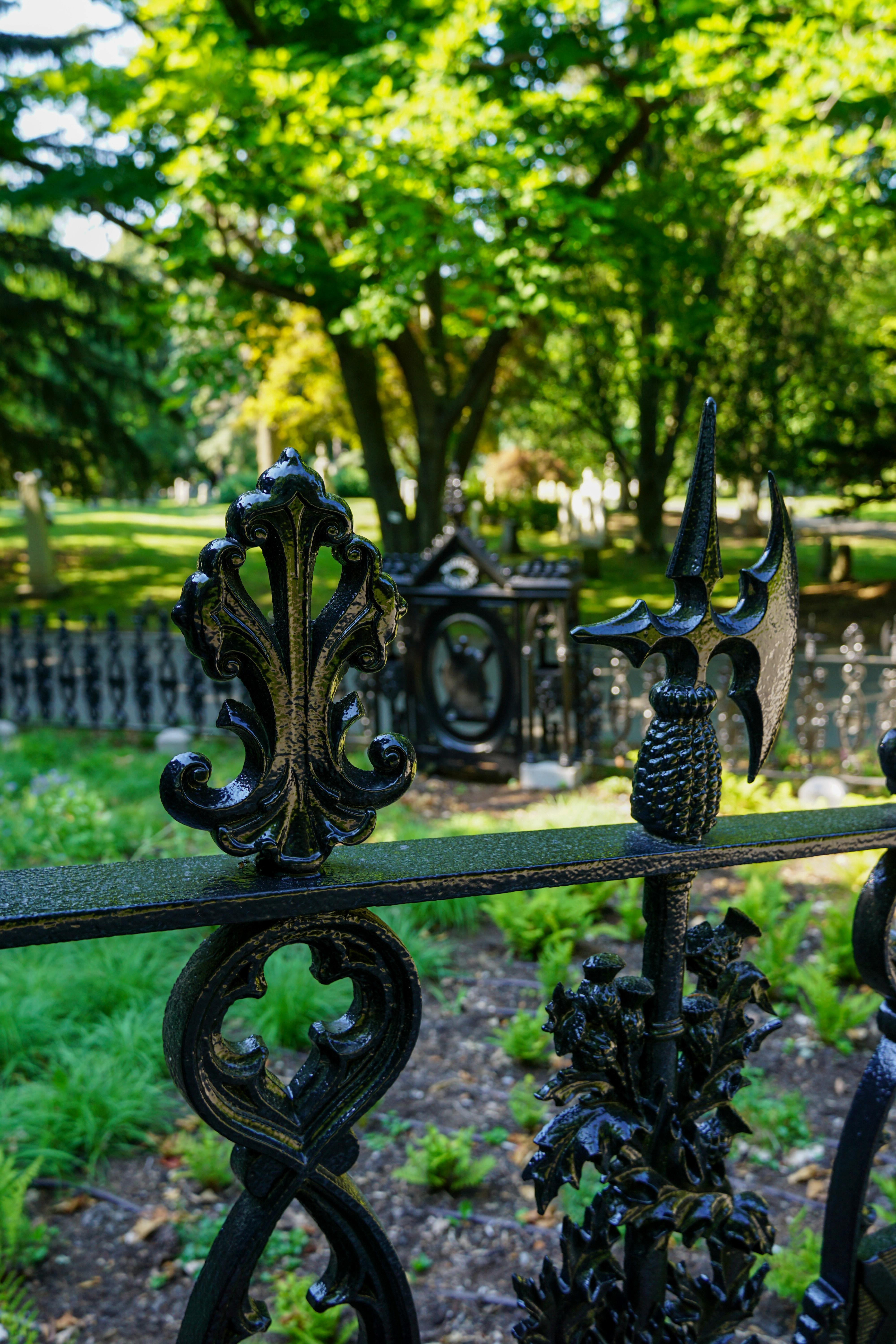
On a July or early August visit to Mount Auburn, look for Acanthus in bloom on Rosebay Path and/or Willow Ave. or view Scots Charitable Society lot fence any time of year.
Beneath the sculptured marble politico
Frank Oliver Call
Of a Greek temple, white against the sky,
Carved capitals on pillars rising high
Gleam like great blossoms in the noonday’s glow.
Proudly each column in the stately row
Its crown of beauty wears; the sunbeams die
Among acanthus leaves that nestling lie
Where they were carved two thousand years ago …
Comments
Comments for this post are closed