
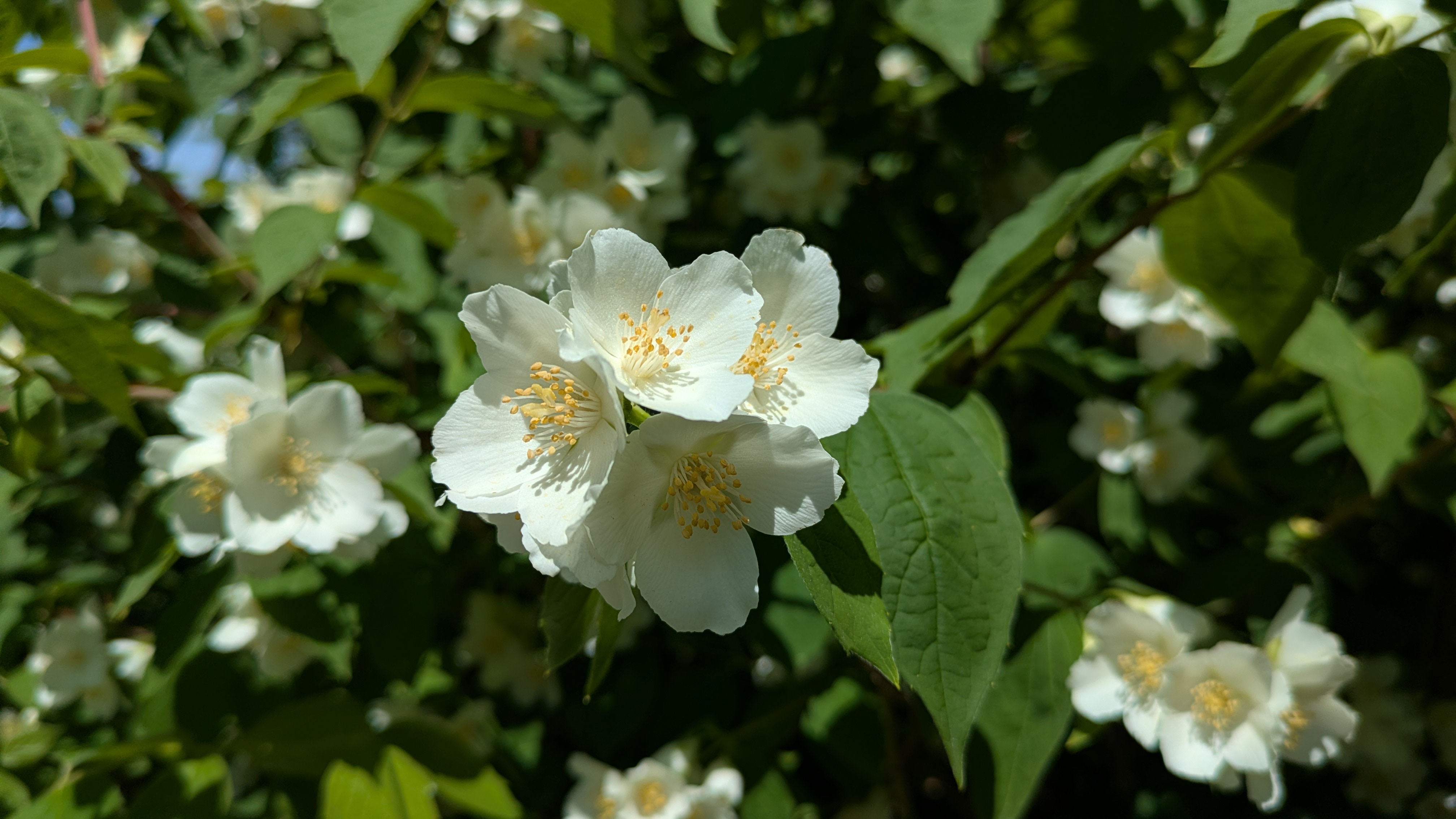
Horticulture Highlight: Mock Orange, Philadelphus sp.
Jim Gorman June 2, 2026 Plants & Wildlife
Smell is a potent wizard that
Helen Keller
transports us across thousands
of miles and all the years we have lived.
…my nose is full of scents
that start awake sweet memories
of summers gone…
Previously we discussed spotted cranesbill that Emily Dickinson (1830-1886) grew in her garden and included in her pressed herbarium pages. Another plant grown by Dickinson, also included in her herbarium sheets is Mock Orange, Philadelphus sp. Cuttings of these two, and all her other pressed specimens are held in the Houghton Library of Harvard University. Photographed and published as a book, by Harvard University Press in 2006, Emily Dickinson’s Herbarium, has on page 50 her collected Mock Orange, Philadelphus sp.
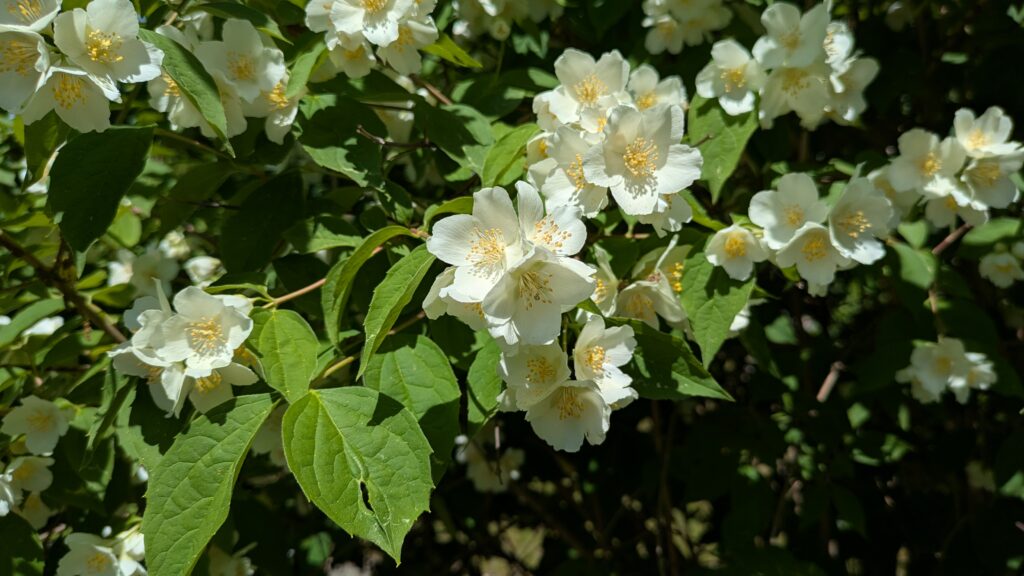
There have been countless others growing Mock Orange, Philadelphus sp. Including George Washington (1732-1799) at Mount Vernon and Thomas Jefferson (1743-1826) at Monticello, among many diverse historic and current landscape sites. Obviously, the sweet fragrance of these four-petaled, white, 1-1 ½-inch flowers emit endears it to gardeners and non-gardeners alike.
…And the scent of mock orange
Louise Gluck
drifts through the window.
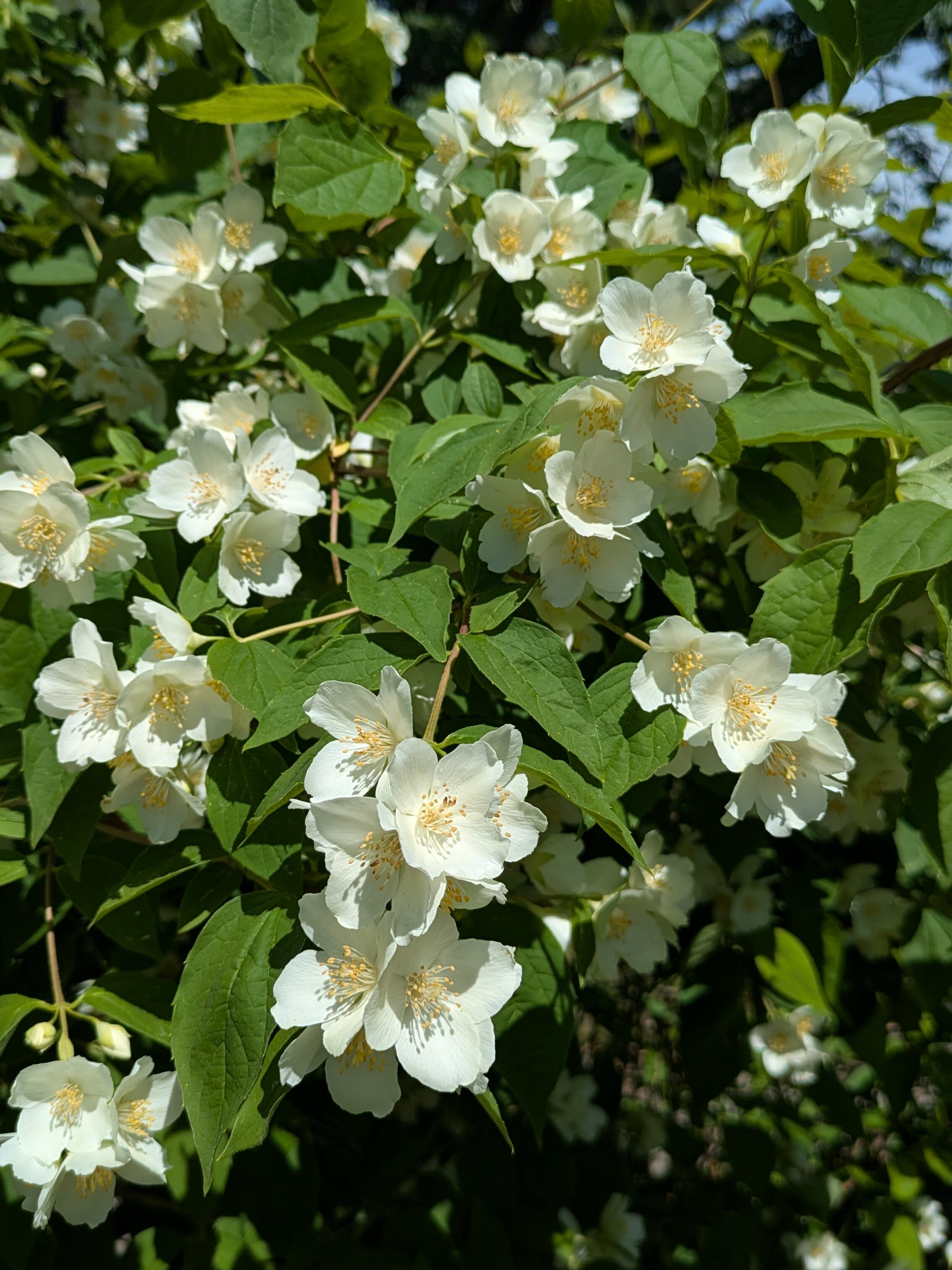
The mid-sized genus Philadelphus includes about 60 species of shrubs native to Asia, Europe, North America and Central America. The scientific name commemorates Ptolemy II Philadelphus, a pharaoh from ancient Egypt (309-246 BC).
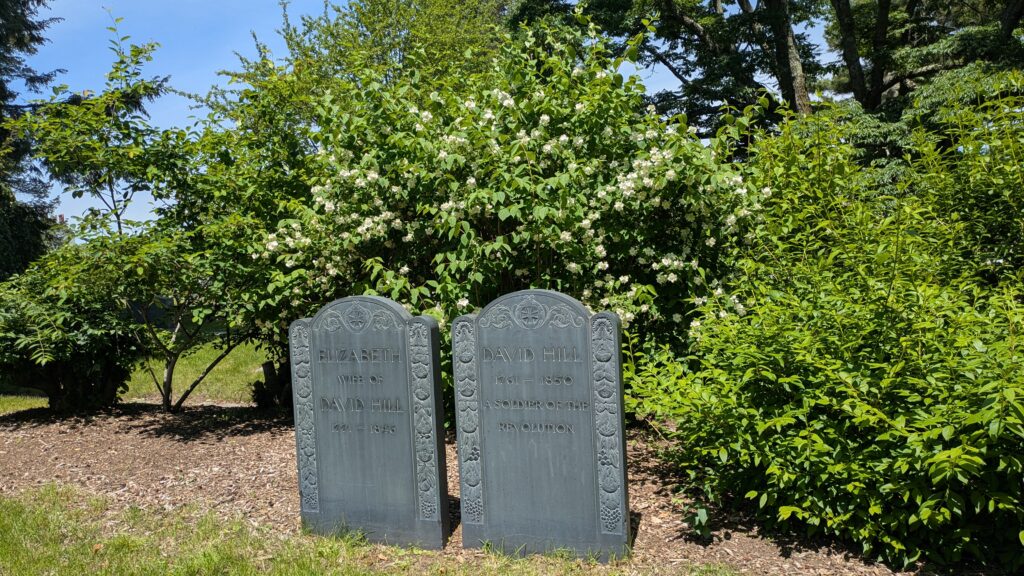
On an early-June visit to Mount Auburn, look for some of our Mock Orange, Philadelphus sp. on Mayflower Path, Elm Ave. or Fountain Ave.
Grown about by fragrant bushes,
Robert Louis Stevenson
Sunken in a winding valley,
Where the clear winds blow
And the shadows come and go,…
Comments
Comments for this post are closed